
If you’ve ever set up a sewing machine, embroidery setup, or crafting station, you may have wondered: what is a spool holder used for? This small but essential tool plays a bigger role in smooth project execution than most beginners realize. Whether you’re working with delicate silk thread, thick upholstery yarn, or standard polyester sewing thread, a spool holder keeps your materials organized, tangle-free, and easy to access. In this guide, we’ll break down exactly what spool holders do, the different types available, and how to pick the best one for your specific needs.
What Is a Spool Holder?
A spool holder is a small tool designed to hold a spool of thread, yarn, wire, or other flexible material in place during sewing, embroidery, quilting, or general crafting projects. Most basic spool holders consist of a vertical or horizontal pin that fits through the center hole of a standard spool, securing it so material can unwind smoothly as you work. While many sewing machines include a built-in spool pin (the most basic type of spool holder), aftermarket options range from simple adjustable pins to large multi-spool racks for dedicated craft rooms.
Most standard sewing machines include a built-in spool pin mechanism that acts as a basic holder, but these often lack the flexibility needed for specialty threads or large-scale projects. Aftermarket holders are designed to address these limitations, offering adjustable sizing, non-slip grips, and compatibility with non-standard spool sizes.
What Is a Spool Holder Used For?
Prevents Thread Tangling and Snagging
The most immediate use of a spool holder is keeping thread, yarn, or wire from tangling, knotting, or snagging as it unwinds. Without a secure holder, a spool can roll across your work surface, unwind unevenly, or get caught on fabric scraps, leading to frustrating knots that slow down your project. A properly sized spool holder keeps the spool stationary, so material unwinds in a smooth, even flow. This is especially important when working with slippery threads like rayon or silk, which tangle easily if not secured properly.
Maintains Consistent Thread Tension
Consistent tension is critical for even stitching, whether you’re sewing a simple tote bag or embroidering a complex design. A spool holder that fits your spool snugly prevents the spool from wobbling, which can cause sudden tension changes that lead to puckered fabric or broken stitches. For example, if a spool is too loose on its holder, it may bounce as you sew, creating uneven tension that results in skipped stitches. Pairing your holder with high-quality thread (like the options outlined in our guide to the best thread for sewing projects) ensures even better results.
Organizes Multiple Spools for Complex Projects
If you’re working on a quilt with 10+ thread colors, or an embroidery design with multiple filament types, a multi-spool holder keeps all your materials within arm’s reach. Instead of digging through a drawer for the right shade of blue, you can arrange spools in order on a rack, saving time and reducing clutter. This is especially useful for professional seamstresses or crafters who work on large, multi-color projects regularly.
Protects Delicate Threads From Damage
Delicate threads like metallic embroidery floss or thin silk can fray or break if they rub against rough surfaces or get tangled with other materials. A spool holder keeps these threads elevated off your work surface, reducing friction and preventing snags. Some specialty holders even include felt pads or rubber grips to further protect fragile spools from scratches or dents.
Works With Specialty Spools and Tools
Standard built-in spool pins are designed for standard-sized thread spools, but they often won’t fit large coned yarn, small bobbin spools, or specialty quilting thread. Adjustable aftermarket spool holders can accommodate spools of almost any size, from tiny 50-yard embroidery spools to large 5000-yard cones used for upholstery. Some holders even include attachments for serger thread or elastic, making them versatile tools for all types of crafting. Most standard spools follow universal dimensional guidelines, but specialty spools often require adjustable holders to fit properly.
- Prevents thread tangling and snagging during projects
- Maintains consistent thread tension for even stitching
- Organizes multiple spools for complex, multi-color projects
- Protects delicate threads from friction and surface damage
- Accommodates specialty spools, cones, and large yarn skeins
Common Types of Spool Holders
Built-In Sewing Machine Spool Pins
Almost every sewing machine includes at least one built-in spool pin, either horizontal (lying flat) or vertical (standing up). These are convenient for basic projects, but they often have limitations: vertical pins can cause thread to unwind too quickly, leading to tangles, while horizontal pins may not fit large spools. They’re best for beginners working with standard thread on small projects.
Adjustable Aftermarket Spool Holders
These are universal holders that clamp onto your sewing machine table or sit freestanding on your work surface. They include adjustable pins that can fit spools from 1 inch to 6 inches wide, making them compatible with almost any thread type. Many also include non-slip bases to prevent the holder from sliding as you sew.
Horizontal vs Vertical Spool Holders
Horizontal holders lie flat, so thread unwinds from the side of the spool. This is better for slippery threads, as it reduces the chance of the spool spinning too fast and tangling. Vertical holders stand upright, so thread unwinds from the top of the spool. They’re better for thick, stiff threads like upholstery yarn, which don’t unwind smoothly on horizontal holders.
Multi-Spool Racks for Craft Rooms
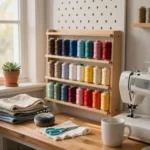
These are large freestanding or wall-mounted racks that hold 10 to 100+ spools at once. They’re ideal for crafters who have large thread collections, as they keep spools organized by color or type, making it easy to find the right thread quickly. Many include labeled sections for different thread weights or fiber types.
Specialty Holders for Embroidery and Quilting
Embroidery holders often include stabilizers to prevent metallic or rayon threads from unraveling, while quilting holders may include extra pins for bobbin storage or seam rippers. Some high-end embroidery machine holders even include sensors that alert you when your thread is running low.
How to Choose the Right Spool Holder for Your Needs
Match the Holder to Your Thread Type
If you mostly use standard polyester thread, a basic built-in pin or adjustable holder will work. If you use delicate silk or metallic thread, opt for a horizontal holder with a non-slip grip. For large coned yarn or upholstery thread, choose a heavy-duty vertical holder that can support the weight of the spool.
Consider Your Machine’s Compatibility
Some aftermarket holders clamp onto sewing machine tables, so check that your table is thick enough to support the clamp. If you have a compact sewing machine, opt for a small freestanding holder instead of a large rack that takes up too much space.
Factor in Project Complexity
If you only sew simple projects like pillowcases or tote bags, a built-in spool pin is sufficient. If you work on multi-color embroidery or quilting projects, a multi-spool rack will save you time and reduce clutter. For professional use, invest in a heavy-duty adjustable holder that can withstand daily use.
Frequently Asked Questions
Can I use a spool holder with any sewing machine?
Yes, most aftermarket spool holders are universal and work with any sewing machine. Built-in spool pins are specific to the machine, but you can add an aftermarket holder to any machine, even vintage models that don’t have a built-in pin.
Do I really need a spool holder if my machine has a built-in pin?
While a built-in pin works for basic projects, an aftermarket holder offers more flexibility. It can fit specialty spools, reduce tangling, and keep multiple spools organized. If you plan to use delicate threads or work on complex projects, a separate holder is a worthwhile investment.
Can spool holders be used for yarn or knitting?
Absolutely. Many spool holders are designed to fit large yarn cones, and some even include attachments for knitting needles or crochet hooks. A yarn spool holder keeps your yarn from rolling across the floor as you knit, reducing tangles and making your project easier to manage.
How do I clean a spool holder?
Most spool holders can be wiped clean with a dry cloth. For sticky residue from thread glue or labels, use a small amount of rubbing alcohol on a cotton swab. Avoid submerging holders with metal parts in water, as this can cause rust.
Conclusion
Spool holders are small, affordable tools that make a big difference in your sewing and crafting workflow. Whether you’re a beginner using standard thread or a professional working with delicate specialty materials, the right spool holder will reduce tangles, maintain consistent tension, and keep your workspace organized. Start by assessing the types of thread you use most often, then choose a holder that fits your machine and project needs. For more tips on setting up your sewing space, check out our related guides on thread selection and machine setup.