
Choosing the right knitting needle size can feel overwhelming when you are just starting out. With so many numbers on the packaging, it is easy to grab the wrong tool and end up frustrated. This guide will walk you through exactly what size knitting needles for beginners work best, so you can enjoy a smooth and relaxing first project. Understanding a few simple rules about yarn weight and needle material will set you up for instant success.
Understanding Knitting Needle Sizes

Knitting needle sizes refer to the diameter of the needle, which directly influences your stitch size. In the United States, sizes are numbered, while most patterns use metric millimeters. A US size 8 needle, for example, equals a 5 mm diameter, making it one of the most common beginner choices.
Smaller numbers indicate thinner needles for fine yarns, and larger numbers mean thicker needles for chunky projects. Confusion can happen because the US numbering system is not perfectly linear, so checking the millimeter measurement is always safer. Most needle packages list both the US size and the metric size clearly.
Beginner knitters do not need to memorize every size right away. The goal is to match the needle to the yarn label recommendation, which we will cover in detail. Learning to read those tiny numbers is the first big step toward beautiful, even fabric.
Why Size Matters for Beginners

Yarniss Bamboo Circular Knitting Needle Set
Check PriceUsing the wrong needle size produces stitches that are either too tight or too loose, making the fabric hard to control. Beginners benefit from a size that feels comfortable in their hands without straining their fingers. A medium size also helps you see each stitch clearly, which is critical when you are learning to identify knit and purl bumps.
Thin needles can cause the yarn to slip off easily and feel fiddly, while very thick needles demand more hand strength. A mid range diameter lets you build muscle memory without fighting the tools. When your hands relax, your tension naturally becomes more consistent.
Many new knitters grab the smallest or largest needles they see, assuming one is easier. That often leads to uneven edges and dropped stitches before you have learned the basics. Starting with a suggested beginner size keeps the learning curve gentle and enjoyable.
Common Needle Materials

Weabetfu 56Pcs Knitting Needles Set
Check PriceBamboo and wood needles are widely recommended for beginners because they offer a slight grip. This gentle friction holds the yarn in place, preventing stitches from sliding off unexpectedly. The warm, lightweight feel also reduces hand fatigue during longer practice sessions.
Metal needles, often made of aluminum or nickel plated brass, are slick and fast. While experienced knitters love the speed, beginners can find them slippery and stressful. If you choose metal, look for a set with a slightly textured tip or a longer taper to help control the yarn.
Plastic needles are another affordable entry point, though they can bend under tighter tension. Acrylic options tend to be very light but may create a squeaky sound that some find distracting. Overall, bamboo gives the best balance of grip, warmth, and forgiveness for a first project.
What Size Knitting Needles for Beginners: General Recommendations

Hzkokon 2.17 Inch Short Interchangeable Knitting Needles
Check PriceA safe, universal starting point is a US size 8 (5 mm) straight or circular needle paired with worsted weight yarn. This combination creates stitches large enough to see easily and a fabric that moves smoothly on the needle. Most beginner patterns, including scarves and dishcloths, are written specifically for this 5 mm size.
Another excellent choice is a US size 7 (4.5 mm) or a US size 9 (5.5 mm), depending on your personal tension. If you tend to knit tightly, go up half a millimeter, and if you knit loosely, drop down slightly. Staying in the 4.5 mm to 5.5 mm range gives you flexibility without overwhelming your technique.
For children or anyone with smaller hands, shorter needles in these same diameters work well. The key is to avoid extremes and stick with the beginner friendly middle ground. Once you complete a simple project, you can confidently explore thinner sock needles or thicker bulky needles later.
Straight Needles vs. Circular Needles for New Knitters

9 Pairs Bamboo Knitting Needles Set
Check PriceStraight needles, the classic pair with a knob at one end, are instantly recognizable and perfect for flat projects like scarves. They are simple to understand, and you knit back and forth without worrying about joining stitches. A 10 inch or 14 inch straight needle in size 8 is a great first purchase.
Circular needles consist of two short tips connected by a flexible cable, and they can do everything straight needles can do plus more. Beginners often find them easier on the wrists because the weight of the project rests in the lap, not hanging off the needle ends. You can knit flat on circulars simply by turning your work at the end of each row.
If you want to purchase just one pair, a 24 inch circular needle in US size 8 offers the most versatility. It allows you to knit flat for a scarf and eventually try a small hat in the round. Many of the best knitting needles for beginners reviewed today come as circular sets for this exact reason. Consider checking a curated list of best knitting needles for beginners to compare options side by side.
How Yarn Weight Determines Needle Size

BetyBedy 36PCS Bamboo Knitting Needles Set
Check PriceEvery yarn label includes a tiny symbol showing a pair of knitting needles with a recommended size. For worsted weight, the label typically suggests 4.5 mm to 5.5 mm, which is why size 8 needles appear in so many beginner kits. Following this suggestion removes the guesswork and ensures your stitches look like the pattern photo.
The Craft Yarn Council Standard Yarn Weight System categorizes yarns from lace to jumbo, providing a reliable needle size chart. Lace weight yarn requires thin needles like 2 mm, while bulky yarn thrives on 9 mm or larger. Sticking to category 4, medium worsted, keeps all your beginner skills manageable.
If you fall in love with a chunky skein, simply look for a recommended needle size around 8 mm to 10 mm, but be aware the larger scale takes extra hand coordination. For your first few projects, the worsted and size 8 partnership is the industry gold standard. Just like learning to read sewing patterns, understanding yarn labels is a skill that quickly becomes second nature, similar to how you would approach how to read sewing patterns with attention to detail.
Reading Needle Size Labels and Gauges

Katech Knitting Needles Set for Beginners
Check PriceMost modern needles print the metric size on the side or end cap, which is far more reliable than the US number alone. So a needle marked 5.0 mm will always be the same diameter regardless of brand. Get in the habit of checking this number, especially if you switch between bamboo and metal needles from different manufacturers.
A gauge is a small square you knit to measure how many stitches and rows fit into 4 inches. While beginners do not need to obsess over gauge on a first scarf, knowing the concept helps you understand why needle size matters. If your gauge has too many stitches, switch to a slightly larger needle, and if it has too few, go smaller.
Knitting a quick gauge swatch before a more fitted project like a hat saves hours of ripping back later. It also teaches you how your unique tension interacts with different yarns. Think of this as your personal knitting fingerprint that improves with every practice square.
Tips for Holding and Controlling Your Needles

7 Pairs Bamboo Knitting Needles Set
Check PriceHow you grip the needles affects comfort just as much as the diameter you choose. Experiment with either the English method, where you hold the yarn in your right hand, or the Continental method, where the yarn stays in your left hand. Neither is right or wrong, so pick the one that feels less awkward and stick with it for a few weeks.
Keep your hands relaxed and avoid clenching the needles as if they might fly away. Resting your elbows on a cushion or armchair helps reduce shoulder tension, especially if you are using longer straight needles. Over time, your fingers will learn to move the yarn and needles in a smooth rhythm.
If your stitches keep sliding off the left needle tip, try bamboo needles for that extra grip. If the yarn sticks too much and squeaks, polish your wooden needles gently with wax paper. Small adjustments in how you hold the tool transform the entire knitting experience.
Top Beginner Mistakes and How to Avoid Them
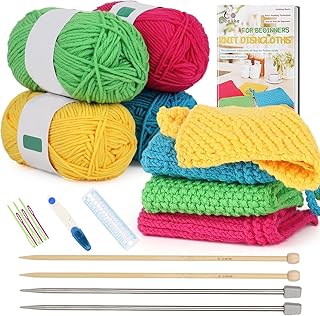
Aeelike Knitting Kit for Beginner Adult
Check PriceOne of the most common errors is knitting with needles that are far too small for the yarn, creating a stiff, painful project. Another frequent mistake is ignoring the yarn label and choosing needles based on color or appearance alone. This leads to a dense fabric that is hard to pull the needle through, causing frustration.
Using needles that are too long for a narrow project can also fatigue your arms, as the extra length bounces around. For scarf widths, 10 inch straight needles or a 24 inch circular keep everything balanced. Beginners also yank the stitches too tightly, so remind yourself to let the needle determine the stitch size, not your pulling force.
Finally, buying the cheapest plastic set can make learning harder because rough tips catch the yarn unevenly. A small investment in a smooth bamboo set, like the options you see featured on this page, pays off immediately in stitch quality. Your tools are an extension of your learning, so choose wisely from the start.
FAQs About Knitting Needle Sizes for Beginners

Fairycece Bamboo Knitting Needles Set
Check PriceWhat size knitting needles should a complete beginner buy first?
A US size 8 (5 mm) bamboo straight or circular needle is the most widely recommended first purchase. It pairs perfectly with worsted weight yarn, the easiest yarn to find. This combination puts you right in the comfort zone for learning basic knit and purl stitches.
Can I use different sized needles on the same project?
Yes, but only intentionally, such as for ribbing where you switch to a smaller needle to create a snugger edge. For a beginner scarf, staying with a single size avoids accidental gauge shifts. Mixing sizes mid project without a pattern instruction will make the fabric look uneven.
How do I know if my needle size is correct without a pattern?
Look at your yarn label and start with the recommended millimeter measurement. Knit a small swatch and examine it from a few inches away. If the stitches look smooth and you like the drape, the size is right, and if the fabric feels stiff or sloppy, adjust up or down by 0.5 mm.
Do circular needles come in the same sizes as straight needles?
Absolutely, circular needles are labeled with the identical diameters, only the tip is attached to a cable. When buying a 5 mm circular, you get the same stitch size as a 5 mm straight needle. This makes it simple to try both styles without relearning anything.
Recommended Beginner Knitting Kits and Sets

Katech Interchangeable Circular Knitting Needles Set
Check PriceInterchangeable needle sets are a smart long term investment because you can swap tip sizes and cable lengths. A set that covers US sizes 4 through 11 gives a beginner room to grow for many future projects. Look for a case that keeps everything organized, since losing a single tip disrupts the entire system.
Starter kits often include stitch markers, a measuring tape, and a small pair of scissors alongside the needles. These all in one bundles save money and ensure you have the correct accessories from day one. A complete kit also removes the temptation to improvise with household items that can snag your yarn.
For those who want the simplest route, a dedicated beginner kit usually contains 9 to 10 pairs of straight bamboo needles in the most popular sizes. This approach lets you test different sizes with various yarn weights without committing to a big set. Compare the featured products above to find a kit that matches your learning style.
Building Your First Needle Collection

WAZAIGUR Interchangeable Bamboo Circular Knitting Needles Set
Check PriceStart with just one or two pairs of needles in the 4.5 mm to 5.5 mm range and master them completely. Once you feel confident, add a set of double pointed needles in the same size for small circular projects like mittens. This gradual approach prevents clutter and overwhelming choices.
When you are ready to venture into chunky knits, move to a US size 10.5 (6.5 mm) or a US size 11 (8 mm) needle with bulky yarn. Having one thin and one thick option covers 90 percent of beginner patterns. You will naturally discover your favorite needle material and tension preferences as you experiment.
Keep a simple needle gauge tool in your bag so you never mix up unmarked needles. As you collect more pairs, a hanging organizer protects the tips and keeps sizes separated. A thoughtfully built collection encourages you to try new techniques without ever feeling that you have the wrong equipment.
Conclusion: Start Your Knitting Journey Confidently

Froggod Lace Interchangeable Circular Knitting Needles Set
Check PriceFinding what size knitting needles for beginners truly means picking a tool that feels friendly and forgiving. A US size 8 bamboo needle paired with a soft worsted yarn removes almost every early obstacle. You can focus on forming stitches, relaxing your hands, and watching your first scarf grow row by row.
Remember that every expert knitter once fumbled with the exact same decision. Trust the label, trust the 5 mm sweet spot, and trust that your skills will outgrow the initial learning phase faster than you expect. The right needle size is not a complicated secret, it is simply a kind invitation to keep knitting.
Explore the recommended products and take the first step with confidence. Your creative journey deserves the best start possible, and now you know exactly how to choose it. Happy knitting, and welcome to the wonderful community of makers.