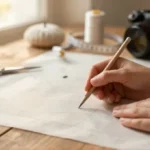

Tracing paper is a sewing room essential that extends far beyond simple pattern copying. It acts as a transparent bridge between a flat pattern and a perfectly customized garment. Understanding how to use it effectively can dramatically improve your fit and design process.
This versatile material allows you to preserve original tissue patterns while making alterations, grading between sizes, or experimenting with design changes. It is affordable, readily available in rolls or sheets, and suitable for both beginners and advanced sewists. In this guide, we will explore the many tracing paper for sewing uses that can transform your workflow.
What Is Tracing Paper for Sewing?
Sewing tracing paper is a semi-transparent, lightweight paper designed specifically for pattern making and alterations. Unlike ordinary tissue paper, it has enough strength to withstand pinning and marking without tearing easily. It typically comes in rolls or large sheets, providing ample space for full pattern pieces.
You can find it under names like Swedish tracing paper, pattern tracing paper, or dressmakers’ tracing paper. Some varieties have a subtle texture that grips fabric slightly while you trace. This unique material lets you see through the original pattern lines clearly, making it easy to transfer markings accurately.
Because it is durable yet flexible, you can fold it like fabric and even stitch it for test garments. Many sewists prefer it over interfacing or muslin for quick fit checks. Its transparency is the key feature that sets it apart from standard paper options.

Tracing Paper Roll – 18″ x 30 yd
Check PricePreserving Original Sewing Patterns
One of the most valuable tracing paper for sewing uses is keeping your original tissue patterns intact. When you trace the pattern onto transparent paper, you avoid cutting or tearing the fragile master copy. This is especially helpful with vintage or out-of-print designs that cannot be replaced easily.
Trace each pattern piece with a pencil or fine-tip marker, transferring all grainlines, notches, and markings. You can then use the traced copy for cutting fabric while the original stays safely stored. Many sewists build a personal library of reusable tracing paper copies so they never have to repurchase a favorite pattern. For more guidance, explore the best tracing paper for sewing that suits this exact workflow.

Tracing Paper Roll – 24″ x 30 yd
Check PriceGrading Between Sizes with Ease
Tracing paper makes blending between sizes remarkably straightforward. Place the original pattern over your roll of tracing material and trace the size lines that correspond to your unique measurements. The transparency lets you see multiple cutting lines at once, so you can smoothly connect a smaller bust to a larger hip or waistline.
Use a clear ruler and a smooth pencil stroke to draw a new seam line that transitions gradually. This method preserves the original pattern while creating a fully custom, multi-size block. For a complete walkthrough on adjusting patterns, read our article on sizing sewing patterns to boost your confidence.

Tracing Paper Roll – 17″ x 25 yd
Check PriceMaking Precise Pattern Adjustments
Lengthening sleeves, raising a neckline, or adding width requires a see-through medium. Tracing paper allows you to overlay the original, draw slash lines, and pivot sections accurately. You can tape extra sheets together to accommodate spreading, maintaining the true shape of the altered area.
After adjusting, you have a fresh copy that is ready for a quick tissue fitting. The lightweight paper behaves like a fabric mockup when pinned, giving an immediate sense of how the changes affect the drape. This saves hours of trial and error with expensive fashion fabric.

Tracing Paper – 36″ x 30 yd
Check PriceTransferring Markings to Fabric
Beyond pattern preservation, tracing paper acts as a brilliant marking tool. You can slide a sheet of carbon-style tracing paper between the pattern and fabric, then run a tracing wheel over the lines. The result is a clean, accurate transfer of darts, pocket placements, and buttonholes directly onto the wrong side of the material.
This technique works especially well on light-colored cottons and linens where chalk marks might smudge. Water-soluble versions rinse away easily after construction, leaving no trace. To see how professionals use this method regularly, check out trusted tracing paper tips from experienced sewists.

Tracing Paper Roll – 36″ x 35 yd
Check PriceCreating Multiple Copies for Design Hacks
When you love a pattern and want to try different collars, sleeve styles, or hem lengths, tracing paper becomes your creative playground. Trace the bodice front once, then trace it again with a modified neckline. You can experiment without losing the original silhouette, building a mini collection of variations.
This approach is perfect for capsule wardrobe enthusiasts who want a single pattern to morph into several garments. Staple the traced pieces together and label each one with the design change for easy reference. The transparency ensures every version retains the core fit that you already perfected.

5 Pcs Transfer Paper – Water-Soluble
Check PriceTesting Fit with Tissue Fitting
Tissue fitting involves pinning the traced paper pattern together and trying it on your body before cutting fabric. Because sewing tracing paper is flexible and slightly fabric-like, it conforms to curves better than rigid paper. You can instantly see if a dart needs repositioning or if a shoulder slope is off.
Mark adjustments directly on the paper with a pen, then transfer those changes back to the flat pattern. This iterative process leads to a truly personalized block that elevates the fit of every future garment. A roll of wide tracing paper makes it simple to trace even large coat or dress pieces for this purpose.

Tracing Paper Roll – 12″ x 25 yd
Check PriceEmbroidering and Crafting Applications
Tracing paper is not limited to garment sewing. Embroidery enthusiasts use it to transfer intricate motifs onto fabric without freehand drawing. Simply trace the design onto the paper, position it on the fabric, and stitch through both layers. The paper tears away gently after the embroidery is complete.
Quilters also rely on tracing sheets for appliqué templates and complex block layouts. The semi-transparent quality lets you align patterns with grainlines effortlessly. It is a cost-effective alternative to specialty stabilizers for small, detailed projects.

Clover Chacopy Tracing Paper
Check PriceTeaching Sewing to Beginners
Introducing a new sewer to patterns is much easier with tracing paper. Students can trace a simple shape and learn how grainlines, notches, and seam allowances work without the fear of wrecking an expensive pattern. The forgiving nature of the paper encourages experimentation and reduces the pressure of perfection during the learning phase.
Many sewing instructors recommend keeping a stack of tracing sheets alongside a basic bodice or skirt pattern. Beginners build confidence quickly when they can see exactly where to sew. The visual clarity of the paper reinforces lessons about balance marks and dart intake more effectively than textbook illustrations.

Tosstuki 47″ x 5 Yards Non Woven Pattern Paper
Check PriceDrafting Custom Patterns from Scratch
When you create a pattern from body measurements, tracing paper gives you a clean, gridded-free surface for drawing seam lines and curves. It is pliable enough to fold and manipulate as you true the edges and match seam lengths. You can see through layers to align intersections with precision.
Dressmakers often draft a bodice sloper on this type of paper because it holds up to repeated handling and pinning during fit sessions. The ability to tape and re-tape sections without losing transparency speeds up the drafting loop. Keep a 36-inch roll on hand for full-scale skirt and coat designs.
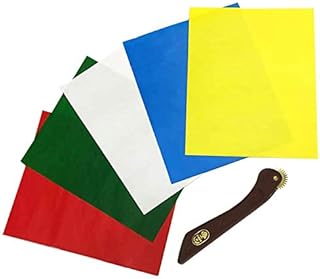
AMORNPHAN 5 Sheets 5 Colors Carbon Tracing Paper
Check PriceStoring Altered Patterns Long Term
Paper patterns can degrade over time, especially if they are folded repeatedly. Traced copies on sturdier tracing material last much longer and can be rolled instead of creased. This makes storage neat and prevents the dreaded torn corner that destroys a favorite pattern piece.
Label the copies with the date, size adjustments, and any notes about the fabric used. You can create a filing system in a large tube or a dedicated drawer. Later, when you want to sew the same garment again, the traced version is ready to use with zero rework, preserving your fitting investment.

Bienfang Sketching & Tracing Paper Roll – 36″ x 50 yd
Check PriceSewing with Tracing Paper for Toiles
A toile, or mockup, is usually sewn from inexpensive fabric, but tracing paper can serve as a quick preliminary toile for simple shapes. You can stitch the paper pieces together using a long machine stitch to test the silhouette before cutting into muslin. This technique works wonderfully for children’s clothing or loose-fitting garments.
The paper toil reveals obvious fit errors at almost no material cost. Once you confirm the shape, you can unpick the seams and use the flattened pieces as your final pattern. This speeds up the prototyping stage dramatically for creative design projects and everyday sewing.

Kissbuty 22 Pcs Transfer Paper and Tracing Paper Set
Check PriceFrequently Asked Questions About Tracing Paper for Sewing
Can I use regular tracing paper for sewing patterns?
Yes, but specialized sewing tracing paper is more durable and flexible. Regular art tracing paper can tear easily when pinned or pulled from fabric. If you sew often, invest in a roll of dressmaker’s tracing paper that handles the repeated wear of pattern adjustments without fraying.
How is tracing paper different from carbon paper for sewing?
Tracing paper is translucent and used for copying pattern outlines onto a new sheet. Carbon paper, often called dressmakers’ carbon, is coated with a colored wax that transfers markings directly onto fabric with a tracing wheel. Both are essential, but they serve distinct steps in the sewing process.
What is Swedish tracing paper?
Swedish tracing paper is a popular brand of nonwoven, fiber-based material that feels like a cross between paper and fabric. It is soft, can be stitched, and tolerates repeated pinning without ripping. Many sewists prefer it for toiles and long-lasting pattern storage due to its resilience and drape.
Can I reuse tracing paper?
Absolutely. Once you have traced a pattern, the paper copy can be used many times as long as you do not cut into the seam allowance. Store it folded or rolled carefully, and it will last through several projects. This reuse makes tracing paper one of the most economical tools in a sewing studio.

Swedish Tracing Paper – Sewing Transfer Paper
Check PriceExploring the many tracing paper for sewing uses opens up a world of precision, creativity, and efficiency. From preserving vintage patterns to drafting entirely new designs, this humble material proves its worth in every phase of garment construction. It is the quiet hero behind exceptional fit and professional finishes.
Start with a single roll and practice tracing a few simple shapes. You will soon wonder how you ever managed without it. Embrace the transparency, and let tracing paper become the foundation of your personalized sewing practice.