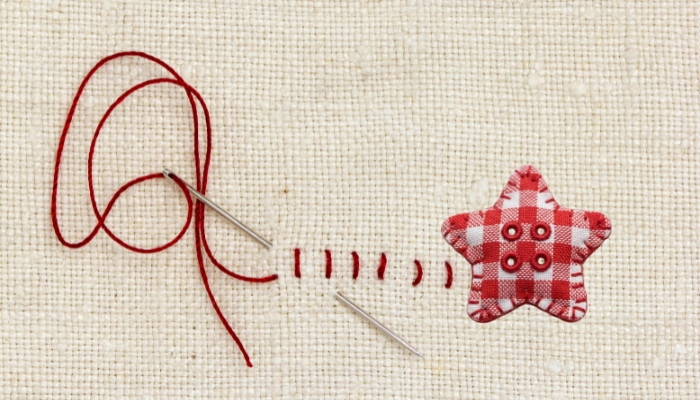

Attaching patches by hand is a simple yet effective way to personalize clothing, bags, and accessories without needing a sewing machine. Whether you’re fixing a tear, adding a decorative patch, or reinforcing a favorite jacket, choosing the right stitch makes all the difference.
The best stitch for patches by hand should be strong, neat, and flexible enough to withstand regular wear and washing. In this guide, we’ll explore the most reliable hand stitches for sewing patches securely, along with tips to help you achieve a clean, professional finish.

2026 New Patch Maker Loom – Knit Patch Loom Kit for Quickly Sewing Repair, Sewing Craft Supplies
Patchmaker Loom 2.0 Kit, 2026 New Patch Maker Loom, Portable Mini Darning Loom Weave Tool, Knit Patch Loom Kit for Quickly Sewing Repair, Sewing Craft Supplies (14 Hooks)
Check PriceQuick Answer: Best Stitches for Hand‑Sewn Patches
Hand‑sewing a patch can make the difference between a temporary fix and a repair that lasts for years. The best stitch depends on:
- What fabric you’re patching
- Where the patch sits (high‑wear vs. low‑wear area)
- Whether you want the patch to be invisible or visible and decorative
This guide explains the most useful hand stitches for patches, when to use each, and how to sew on a Patch by Hand step by step.
| Situation / Fabric | Best Stitch (Primary Choice) | Good Alternatives |
|---|---|---|
| Light–medium fabric (shirts, bags, nylon) | Running or whip stitch | Backstitch, invisible (ladder) stitch |
| Heavy fabric (denim, canvas, workwear) | Backstitch for strength | Whip stitch, sashiko (visible mending) |
| Leather or very thick material | Saddle stitch | Strong backstitch |
| You want the patch nearly invisible | Invisible / ladder (slip) stitch | Fine running stitch close to edge |
| You want a decorative visible border | Blanket or whip stitch | Sashiko‑style running stitches |

KING MOUNTAIN Iron-on Repair Patch 20 Pcs Pack
100% Cotton Denim Iron-on Repair Patch,Jeans and Clothing Repair and Decoration Kit (Five Color), KING MOUNTAIN Iron-on Repair Patch 20 Pcs Pack,Denim Patches for Jeans Kit 3″ by 4-1/4″
Check Price1. Running Stitch – Best for Simple, Light Patches
Best for:
- Light to medium fabrics (cotton shirts, lightweight trousers, thin nylon)
- Small or medium patches
- Beginners and quick fixes
Why it’s good:
The running stitch is the simplest hand stitch: in–out–in–out along the edge. It’s fast and easy to control, making it ideal for someone new to hand sewing. Several mending guides list it as a go‑to basic for clothing repairs and patching[1][2][3].
How to do a running stitch for a patch:
- Prepare the patch
- Cut your patch slightly larger than the hole (at least 1–2 cm/½–¾” all around).
- Fold and press the raw edges under if you want a clean finish.
- Position and secure
- Pin or baste the patch in place where you want it.
- Start stitching
- Thread your needle (double thread for strength), knot the end.
- Bring the needle up from the wrong side (inside) so the knot is hidden.
- Sew around the patch
- Weave the needle in and out along the edge of the patch, keeping stitches short and even (about ⅛–¼”).
- Keep the line about 1–2 mm from the folded edge.
- Finish
- Overlap the first stitch by a few millimeters, then knot on the inside and weave the thread tail through a few stitches before trimming.
When to avoid it:
Running stitch alone isn’t the strongest choice for areas that see a lot of strain (knees, seat of pants, backpack straps). In those cases, use backstitch or add a second row of running stitches for extra strength.

VONEEDL Upholstery Repair Kit: Waxed Sewing Thread (3 Colors) & Heavy Duty Needles (11 PCS)
VONEEDL Upholstery Repair Kit: Waxed Sewing Thread (3 Colors) & Heavy Duty Needles (11 PCS) for Leather, Canvas & Quilting Thread
Check Price2. Backstitch – Best All‑Round Strong Stitch
Best for:
- Denim, canvas, work jackets, heavy cotton
- High‑stress areas (elbows, knees, seat, backpack corners)
- Patches you want to last a long time
Why it’s good:
Backstitch creates a solid, almost machine‑like line of stitching that resists pulling and strain. Sewing resources highlight it as the go‑to when you need strength in a repair[4][2][3].
How to sew a backstitched patch:
- Secure the patch as above (pin or baste).
- Start with a small stitch
- Bring the needle up through fabric and patch near the edge.
- Make a short stitch forward (down again), then bring the needle up a stitch length ahead.
- Back into the previous hole
- Put the needle back down into the end of the previous stitch, then up another stitch length forward.
- Repeat around the patch
- Always come up ahead and go back into the end of the last stitch.
- Keep stitches short (≈⅛–¼”) and evenly spaced.
- Finish securely
- Overlap the last few stitches, knot on the inside, and weave in the tail.
Tip:
For denim or canvas, use a strong polyester or topstitch thread and a sharp, sturdy needle. If the fabric is very thick (like multiple denim layers), a thimble helps push the needle through.

BAGERLA Upholstery Repair Sewing Kit Heavy Duty Sewing Kit with Awl Tools
Hand Stitching Needles, Upholstery Thread, Leather Craft Tool for Shoes Sofa Tent Carpet Craft DIY, BAGERLA Upholstery Repair Sewing Kit Heavy Duty Sewing Kit with Awl Tools, Seam Ripper
Check Price3. Whip Stitch – Best for Securing and Edging Patches
Best for:
- Edges that fray easily (denim patches, applique patches on bags and jackets)
- Visible, decorative borders
- Sewing patches on thicker or layered fabrics
Several guides on sewing patches mention whip stitch as a favorite for attaching patches to jackets and bags because it’s quick, strong enough for daily wear, and easy to control around curves and pockets[5][6].
How to whip stitch a patch:
- Place the patch on top of the fabric, covering the hole.
- Anchor the thread
- Start from the inside of the garment so the knot is hidden.
- Bring the needle out at the edge of the patch.
- Wrap around the edge
- Insert the needle slightly outside the patch edge, catching both patch and garment, and bring it up again on the patch edge.
- The thread will wrap around the edge each time, forming slanted stitches along the border.
- Continue around
- Space stitches evenly (≈⅛–¼” apart).
- Keep the tension firm but not so tight that the fabric puckers.
- Finish
- Overlap a couple of stitches, tie off on the inside, and weave in the end.
Why choose whip stitch?
- Helps seal raw fabric edges, reducing fraying.
- Visually neat, great for visible patches on denim, canvas, or backpacks.

Fiskars Sewing Kit, Gifts for Mom, 27-Piece
Fiskars Sewing Kit, Gifts for Mom, 27-Piece Travel Sewing Set with Case, Orange
Check Price4. Blanket Stitch – Best for a Decorative, Reinforced Edge
Best for:
- When the patch edge is a design feature
- Medium to heavy fabrics
- Edges that need extra reinforcement
Some sewers prefer blanket stitch especially on denim patches because it both attaches the patch and binds the edge, helping prevent fraying and giving a decorative border[7].
How to blanket stitch a patch:
- Place and pin the patch.
- Start from the inside, come up at the edge of the patch.
- Insert the needle down into the garment just outside the patch, then bring it up again along the patch edge.
- Before pulling the thread tight, catch the loop of thread with the needle so the thread lies along the edge, forming a L-shaped stitch.
- Repeat around the patch: each vertical stitch is hooked by a horizontal thread along the edge.
Blanket stitch is especially attractive for patches on visible areas like jacket backs, elbows, and children’s clothing where you want the mend to be decorative.

Amrules Iron Patches, 30 Piece 3.7 X 4.9 Inch Multi-Colored Fabric Repair Kit
Iron Patches, 30 Piece 3.7 X 4.9 Inch Multi-Colored Fabric Repair Kit, 29 Shades Iron on Patches for Jeans, Shirts, Clothes, Pants
Check Price5. Invisible / Ladder (Slip) Stitch – Best for Hidden Patches
Best for:
- Inside patches or underlays you don’t want to see from the outside
- Matching fabric repairs where you want the seam to blend in
- Finishing small holes and neat hems
Sewing tutorials describe the ladder or blind stitch as an invisible stitch because, done correctly, it almost disappears on the right side of the fabric[8][9].
How to use ladder stitch for an invisible patch:
- Patch placement (often from inside)
- Place the patch behind the hole (inside the garment) and secure it with pins or temporary basting.
- Hide the knot
- Start on the inside, bring the needle up just at the edge of the hole so the knot stays hidden.
- Form the ladder
- Take a tiny horizontal stitch through the edge of the patch, then a tiny stitch on the garment’s edge opposite it.
- Keep going back and forth, catching just a few threads on each side, so the thread runs like the rungs of a ladder between the two edges.
- Pull gently
- When you pull the thread tight, the fabric edges draw together and hide the stitches.
- Secure the end
- Make a small knot tucked just inside the fabric layers, then hide the thread tail inside the seam.
This stitch is ideal when you’re patching from behind and want the outer side to look as close to original as possible (e.g., dress trousers, nice shirts).
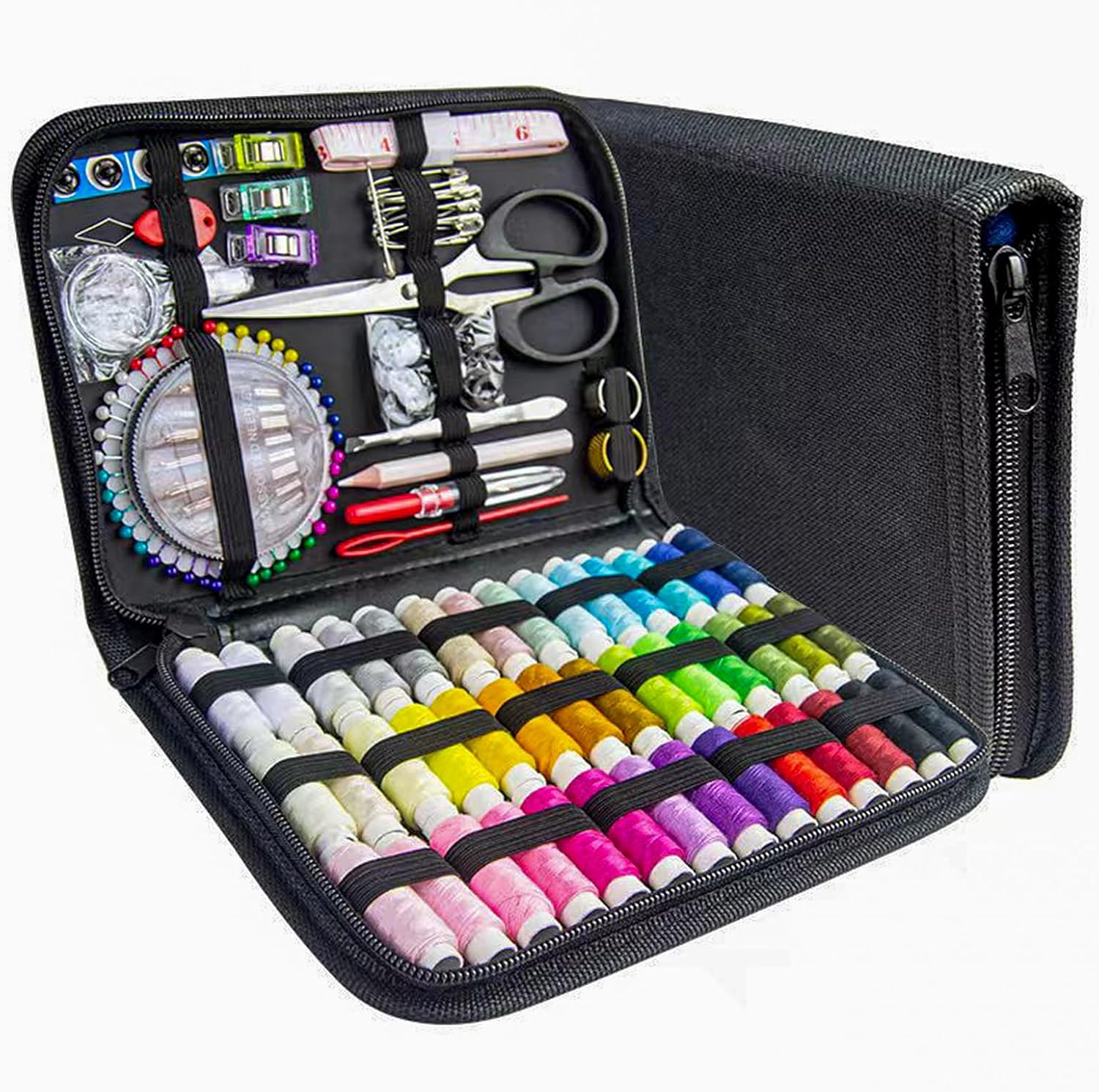
JUNING Sewing Kit with Black Case Portable Sewing Supplies for Home
JUNING Sewing Kit with Black Case Portable Sewing Supplies for Home, Travel, Adults, Beginner, Emergency, 42 Threads, Scissors, Needles, Measuring Tape
Check Price6. Sashiko‑Style Running Stitches – Best for Visible Denim Patching
Best for:
- Denim jeans (knees, thighs, seat)
- Visible mending styles
- Large patches on high‑wear areas
Sashiko is a Japanese hand‑stitch technique often used to reinforce and decorate denim, especially when patching from the inside with a visible grid or pattern on the outside[10].
Basic sashiko approach for a patch:
- Place a denim patch behind or over the hole, secure well.
- Draw a simple grid or guide lines with a fabric pen.
- Use strong cotton or embroidery thread and a longer needle.
- Work rows of even running stitches following your grid, going beyond the edges of the damaged area to strengthen the surrounding fabric.
The result is a highly durable repair that looks intentional and artistic, perfect for jeans and workwear.
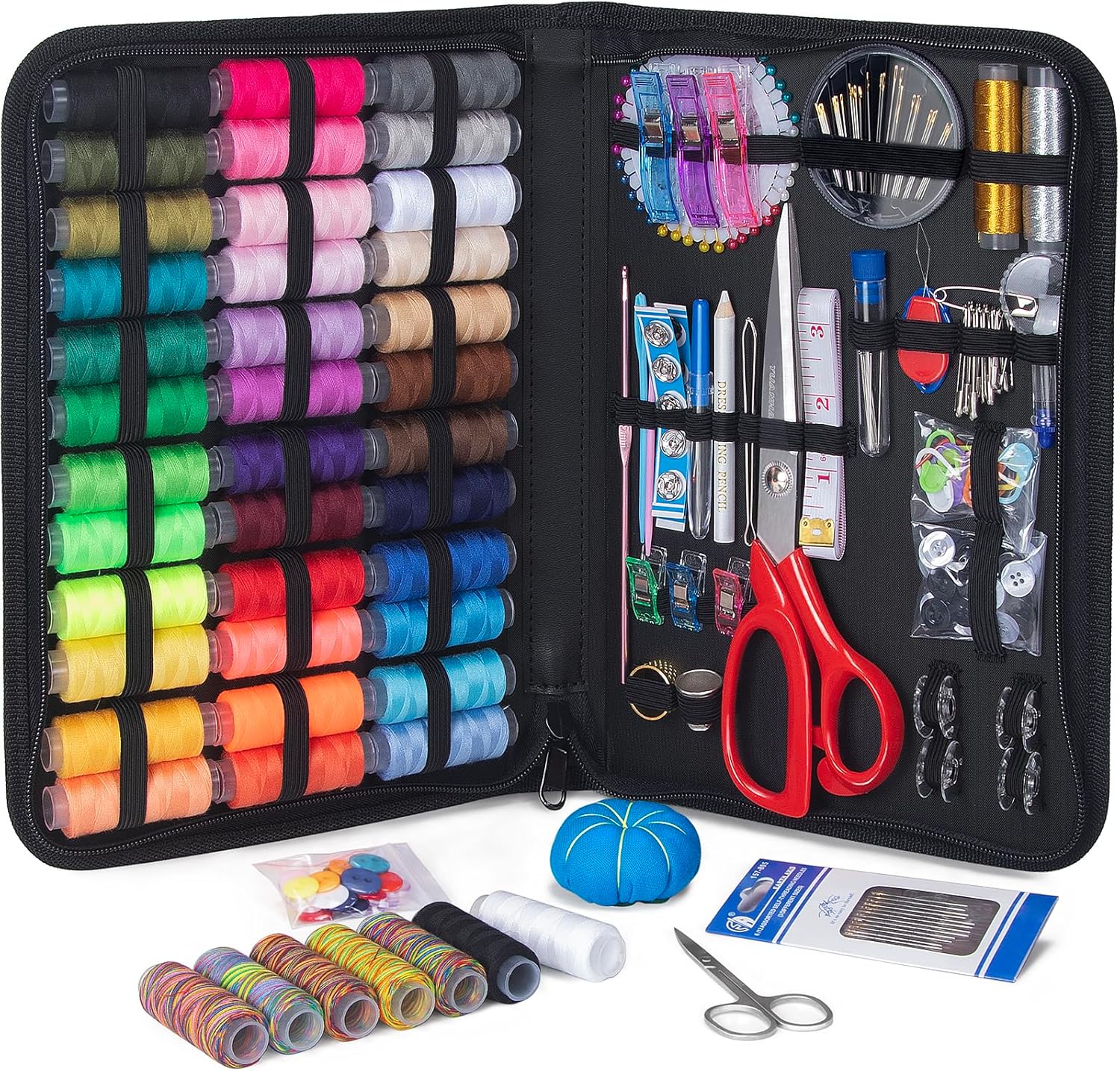
Large Sewing Kit for Adults: YUANHANG Newly Upgraded 251 Pcs Premium Sewing Supplies Set
Complete Sew Kit of Needle and Thread for Beginners – Travel Emergency – Basic Home Hand Sewing Repair Kits, Large Sewing Kit for Adults: YUANHANG Newly Upgraded 251 Pcs Premium Sewing Supplies Set
Check Price7. Saddle Stitch – Best for Leather Patches
Best for:
- Leather jackets, bags, gear
- Any leather or very thick material patch
Leatherworkers generally consider saddle stitch the strongest hand stitch for leather because each hole holds two interlocking threads, so even if one breaks, the seam doesn’t instantly fail[11][12].
Simplified saddle stitch method (for patches):
- Pre‑punch holes along the patch edge and corresponding area of the leather item using a pricking iron or awl.
- Two needles, one thread
- Cut a long piece of thick waxed thread and put a needle on each end.
- Start in the middle hole
- Push one needle through from the patch side to the inside.
- Pull until thread is centered (half each side).
- Stitch each hole
- For every hole: pass the right‑hand needle through, then the left‑hand needle through the same hole from the opposite side, pulling firmly.
- Finish by backstitching 2–3 holes and trim the ends.
This gives an exceptionally tough join suitable for leather patches on motorcycle jackets, bags, or work gear.
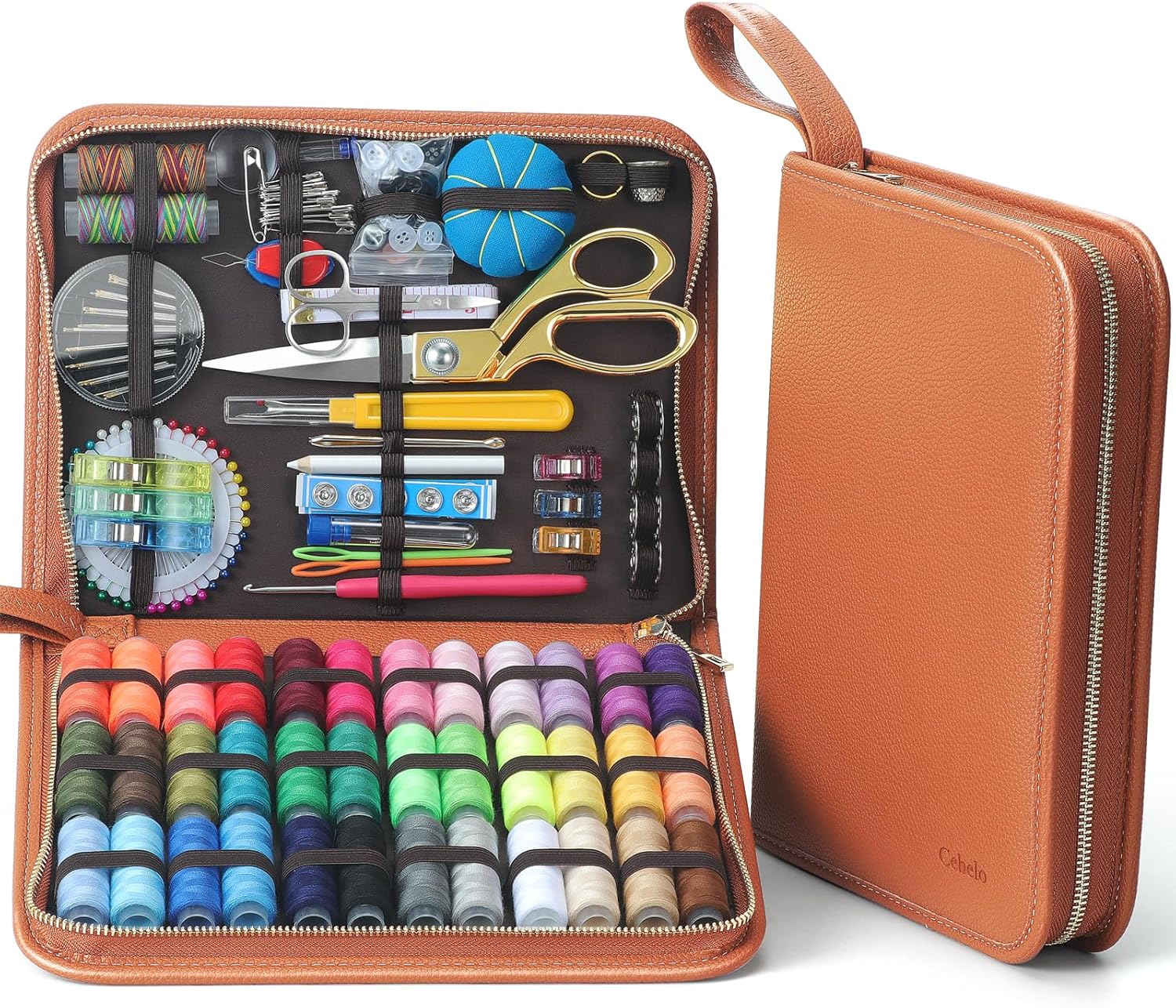
Cebelo Large Sewing Kit for Adults: 232 Pcs Sewing Supplies for Hand Mending Clothes Emergency Repair
Cebelo Large Sewing Kit for Adults: 232 Pcs Sewing Supplies for Hand Mending Clothes Emergency Repair for Home Travel Dorm – 2026 Christmas Gifts for Mom Grandma Students Beginner (Brown)
Check Price8. Practical Tips for Any Hand‑Sewn Patch
- Match patch weight to fabric
– Use similar or slightly heavier fabric than the original, especially on denim and canvas. - Use the right thread
– All‑purpose polyester for most clothing, embroidery cotton for sashiko, strong nylon or waxed thread for leather/nylon gear. - Baste first
– Quick temporary running stitches around the edge keep the patch from shifting while you sew permanently[6]. - Keep stitch length consistent
– Shorter stitches = stronger seam and neater look. - Don’t overtighten
– Pull your thread just enough to lie flat. Over‑tightening causes puckers and distortion. - Secure ends well
– Always knot on the inside and weave tails through several stitches before cutting.

Topus Extra Strong Upholstery Repair Sewing Thread Kit and Heavy Duty Household Hand Needles
Including 7 Styles of Leather Canvas Sewing Needles and 3 Rolls Nylon Thread (70 Yard of Each Roll), Black, Extra Strong Upholstery Repair Sewing Thread Kit and Heavy Duty Household Hand Needles
Check PriceWhich Stitch Should You Use?
If you want one simple rule for the best stitch for patches by hand:
- For most clothing (shirts, light to medium fabrics):
→ Start with running stitch or whip stitch around the patch. - For high‑wear areas and heavy fabrics (denim knees, elbows, canvas bags):
→ Use backstitch (or sashiko‑style running stitches if you like visible mending). - For leather:
→ Use saddle stitch. - For nearly invisible repairs:
→ Use ladder/invisible stitch along the patch edge, especially when patching from behind.
Choose based on durability first, then on appearance. With these stitches and a bit of practice, your hand‑sewn patches can be both strong and good‑looking.

Simthread 40 Colors 40 Weight Polyester Embroidery Machine Thread Kit
Simthread 40 Colors 40 Weight Polyester Embroidery Machine Thread Kit 550Y(500M) Compatible with Brother Babylock Janome Singer Husqvarna Bernina Embroidery and Sewing Machines
Check PriceReferences
[1] HAND SEWING STITCHES FOR MENDING. https://madamsew.com/blogs/sewing-blog/hand-sewing-stitches-mending
[2] 5 BASIC HAND STITCHES FOR MENDING CLOTHES. https://talu.earth/5-basic-hand-stitches-for-mending-clothes/
[3] HOW TO SEW. https://www.instructables.com/How-to-Sew./
[4] 6 ESSENTIAL HAND SEWING STITCHES EVERY MENDER AND …. https://www.fibreofmybeing.com.au/blog/essential-hand-sewing-stitches
[5] BEST HAND-STITCHING METHODS? : R/JACKETSFORBATTLE. https://www.reddit.com/r/jacketsforbattle/comments/1d8hiy5/best_handstitching_methods/
[6] SEWING ON A PATCH BY HAND OR SEWING MACHINE. https://www.stitchclinic.com/sewing-on-a-patch/
[7] BEST WAY TO PATCH JEANS BY HAND SEWING?. https://www.facebook.com/groups/2595664814092384/posts/4069960103329507/
[8] HOW TO BLIND STITCH. https://www.thesprucecrafts.com/how-to-blind-stitch-5069469
[9] HOW TO DO AN INVISIBLE STITCH (LADDER STITCH) BY HAND. https://www.applegreencottage.com/invisible-stitch-ladder-stitch/
[10] SASHIKO STITCHING: THE PRETTIEST WAY TO PATCH YOUR PANTS. https://www.levi.com/US/en_US/blog/article/sashiko-stitching-the-prettiest-way-to-patch-your-pants
[11] HOW TO HAND SEW LEATHER USING FOUR POPULAR STITCHES. https://www.weaverleathersupply.com/pages/how-to-hand-sew-leather
[12] THE ART OF HAND STITCHING LEATHER. https://www.tannerbates.co.uk/blogs/news/the-art-of-hand-stitching