
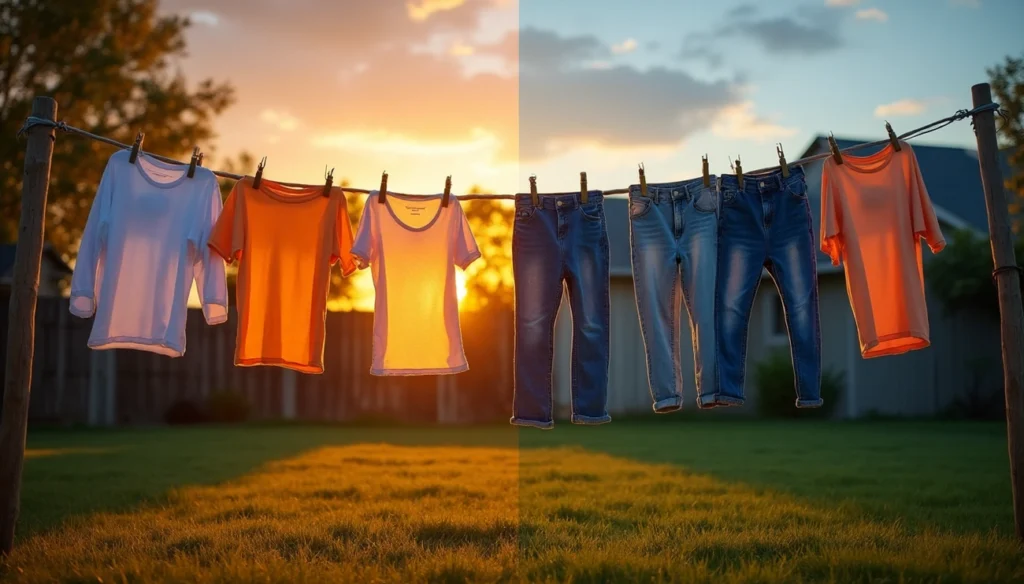

Yes, clothes can dry outside at night, but drying depends on humidity, temperature, and airflow. In warm, dry, breezy conditions, clothes may continue drying overnight. However, high humidity or dew can make clothes damp again. To avoid odors or moisture buildup, check the forecast or bring clothes in before morning.
Can you leave clothes out to dry overnight?
Many homeowners wonder if their laundry will successfully dry when left outside during nighttime hours. The answer isn’t straightforward – it depends on several factors including weather conditions, season, and your specific location.
What happens to clothes left out at night
Nocturnal humidity significantly affects the drying process. Unlike daytime conditions, moisture in the night air can prevent proper evaporation. Morning dew often makes your clothes damper than when you hung them, essentially undoing any drying that occurred overnight. This is especially problematic during spring and fall seasons.
If damp clothes remain in humid conditions for 8-12 hours, bacteria and mildew may begin forming. This not only results in unpleasant musty odors but can potentially affect your health. According to medically-reviewed information, mildew thrives in warm, damp environments and may cause symptoms like stuffy nose, wheezing, and itchy eyes or skin for sensitive individuals.
When it might be okay to do so
Despite these concerns, there are circumstances where overnight drying works well:
- During summer months with minimal dew formation
- In regions with low humidity and warm night temperatures
- Under covered outdoor spaces that protect from morning moisture
Indeed, some people intentionally hang laundry at night to maximize drying time. As one homeowner notes, “I hang my washing out at night then take it off after work the next day”. This practice is particularly common in extremely hot climates where daytime sun might damage fabrics.
Common misconceptions
Numerous misconceptions exist about nighttime laundry drying. One prevalent belief is that clothes will never dry at night – yet in warm, dry conditions, they certainly can achieve significant drying.
Another common myth involves superstitions. In some cultures, hanging clothing outside after dark supposedly attracts wandering spirits or negative energy. As one source explains, “In ancient Japan, it was customary to wash kimonos of the deceased and hang them out to dry at night to ward off evil spirits”.
Some people worry about theft, believing visible laundry signals an empty house. Nevertheless, this risk is minimal in most neighborhoods with properly secured clotheslines and good quality pegs.
The science behind drying clothes outside
Drying laundry outdoors involves fascinating scientific processes that explain why your clothes dry faster in certain conditions. Understanding these principles helps optimize your laundry routine regardless of weather conditions.
How evaporation works
At its core, drying clothes is about evaporation – the process where water molecules escape from fabric into the air. Contrary to common belief, water doesn’t need to reach boiling point to evaporate. Even at cold temperatures, some water molecules possess enough energy to break free from their liquid state and become gas.
This process happens because not all water molecules have identical energy levels. Though the average temperature might be low, some molecules maintain higher energy, allowing them to escape as vapor. As these energetic molecules depart, the fabric’s temperature initially drops, subsequently drawing heat from the surrounding environment to continue the evaporation process.
Role of temperature, wind, and humidity
Three primary factors determine how quickly your clothes dry:
- Temperature: Higher temperatures provide water molecules with more energy to break free from fabric. This explains why clothes dry faster on warm days.
- Wind: Airflow prevents saturation by sweeping away water vapor from clothing surfaces. Without wind, the air surrounding wet fabric becomes saturated with moisture, significantly slowing evaporation.
- Humidity: The air’s existing moisture content dramatically affects drying speed. In dry environments, evaporation occurs rapidly since the air can absorb more moisture. Conversely, humid air already holds substantial water vapor, limiting its capacity to accept more from wet clothes.
Why night conditions are less effective
Nighttime presents challenges for drying clothes effectively. First, temperatures typically drop after sunset, reducing the average energy of water molecules and slowing evaporation. Second, relative humidity often increases at night, sometimes approaching saturation (100% RH).
Most importantly, nighttime lacks solar radiation – a crucial energy source for evaporation. Direct sunlight provides energy that accelerates water molecule movement, hence clothes dry notably faster in sunshine than in shade, even at identical temperatures. Consequently, answering “will clothes dry outside at night” depends primarily on nighttime humidity levels rather than temperature alone.
How to dry clothes outside safely and effectively
For optimal laundry results, timing and strategy are crucial when drying clothes outdoors. Knowing the best practices can save you from dealing with damp, musty-smelling laundry or having to rewash items that didn’t dry properly.
Morning vs. evening drying
First and foremost, the best time to hang laundry outside is between 10am and 4pm when both temperature and sunlight are at their peak. Ideally, set your washing machine on a timer so your laundry is ready to hang first thing in the morning, maximizing drying time. Many experienced homeowners use quick-start strategies like setting the washer to finish at 5am, allowing them to hang clothes by 6-7am.
Evening drying is less effective as cooling temperatures slow evaporation. In fact, dew typically forms as the sun sets, making dry clothes slightly damp again. However, if you must wash in the evening, bring clothes in before dusk or use alternative drying methods.
Using covered outdoor spaces
An outdoor clothes drying shed offers an excellent balance between air-drying benefits and protection from sudden weather changes. Other effective covered options include:
- Porches or verandas with open sides that allow airflow while shielding from rain
- Empty greenhouses (not actively used for plants as they’re typically too humid)
- Garages with good ventilation
- Pergolas with corrugated plastic roofing
These spaces prove particularly valuable during unpredictable weather, allowing clothes to continue drying even with light precipitation.
Weather-proof drying strategies
Check weather forecasts before washing and look for breaks in weather patterns. Surprisingly, you don’t need sunshine for clothes to dry—just dry air. A practical test: if outdoor tiles or walkways appear dry, humidity is likely low enough for effective air-drying.
For windy days, double-peg everything to prevent items from blowing away. With dark-colored garments, position them with backs facing the sun to prevent fading. For maximum efficiency, use the highest spin cycle on your washing machine before hanging items.
How long do clothes take to dry outside in different seasons
With proper conditions, clothes can dry in as little as 4 hours on hot, breezy days, while cooler but still breezy days might require 6 hours. In winter, drying remains possible with the right approach. On dry, sunny winter days, clothes may freeze but will eventually dry through sublimation—when ice transforms directly into water vapor. For best results in colder months, hang laundry early to maximize daylight exposure.
When not to dry clothes outside
Despite the convenience of outdoor drying, several situations exist where hanging laundry outside may not be the best choice. Understanding these exceptions helps homeowners make informed decisions about their laundry routine.
Allergy risks from pollen
Outdoor-dried laundry can worsen symptoms for allergy sufferers, as clothes easily collect airborne pollen. When bedding hangs outside during high pollen season (beginning in February and lasting until early summer in most states), it accumulates microscopic pollen particles. These allergens then transfer directly onto your skin and into your breathing space.
Allergy experts advise against air drying for those with seasonal sensitivities. As one pulmonary physician notes, “I’ve had numerous patients present with non-stop sneezing, clogged noses, and coughs, only to discover their fresh laundry was introducing allergens right into their home”. For allergy sufferers, experts recommend drying clothes indoors with windows closed.
Sunlight fading dark fabrics
The sun’s ultraviolet rays gradually break down fabric dyes, causing colors to lose vibrancy over time. Dark and brightly colored fabrics are particularly vulnerable as they absorb more UV light. While sunlight effectively kills bacteria that cause odors, this same UV strength simultaneously damages colorful textiles.
To protect dark clothing from premature fading, consider drying these items in shaded areas or indoors. Even brief exposure can affect color retention in quality garments.
HOA or neighborhood restrictions
Many homeowners associations restrict or ban clotheslines entirely. Alexander Lee, a “right-to-dry” activist, estimates that “more than half of all HOAs restrict or ban the use of clotheslines”. These regulations often aim to maintain neighborhood esthetics, as visible laundry may “dramatically alter the visual landscape”.
Thankfully, 19 states have enacted “right-to-dry” laws protecting homeowners’ rights to use clotheslines. Check your local regulations first to avoid potential fines.
Insect and animal interference
Outdoor laundry attracts various creatures. Birds may leave droppings or pull threads from knit items for nesting material. Insects, likewise, can be problematic—ants may crawl onto clothes and bite, while other pests potentially damage fabrics.
Always inspect outdoor-dried items before bringing them inside, and retrieve laundry promptly once dry to minimize these risks.
Conclusion
Drying clothes outside at night presents several challenges, yet remains possible under specific conditions. After exploring the science of evaporation, we understand why nighttime humidity, cooler temperatures, and lack of solar radiation significantly slow the drying process. Despite these limitations, certain situations—particularly summer evenings in low-humidity regions—can still yield satisfactory results.
Above all, timing matters when air-drying laundry. Morning hours between 10am and 4pm offer optimal drying conditions compared to evening or overnight exposure. For homeowners determined to maximize laundry efficiency, covered outdoor spaces provide an excellent compromise, protecting clothes from morning dew while allowing proper airflow.
Weather considerations certainly play a crucial role in outdoor drying success. Before hanging clothes, check weather forecasts and humidity levels. Additionally, remember that outdoor drying isn’t always appropriate—especially for allergy sufferers during pollen season, those with dark fabrics prone to fading, or residents bound by HOA restrictions.