
If you’ve ever spent 20 minutes fighting to thread a standard serger’s loopers, you’ve probably asked yourself: what sergers have air threading? Air threading is a game-changing feature that uses compressed air to pull thread through looper channels in seconds, eliminating the frustration of manual threading. This guide breaks down exactly which sergers offer this feature, how air threading works, and whether it’s worth the investment for your sewing projects.
Sergers (also called overlock machines) are essential for finishing garment seams, preventing fraying, and creating professional-looking hems. If you’re new to serging, you may want to review our detailed serger vs overlock vs coverstitch breakdown to understand how these machines differ from standard sewing machines, and when to use each type of stitch.

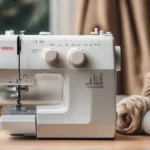
Janome AirThread 2000D Serger
Check PriceHow Does Air Threading on a Serger Work?
Key Components of Air Threading Systems
Air threading systems rely on a small built-in air compressor, usually located inside the serger’s body, that pushes bursts of compressed air through narrow tubes connected to each looper. According to industry experts at Threads Magazine, this design eliminates the need for fiddly tweezers or threading hooks that often come with manual serger models. Most systems include clearly labeled air ports for each looper, color-coded thread paths, and a dedicated button to trigger air bursts.
Step-by-Step: Threading a Serger with Air Technology
- Load your thread cones onto the serger’s spool pins, following the standard color-coded thread path for the upper looper, lower looper, and needles.
- Clip the end of each thread to create a clean, pointed tip, then insert the thread into the designated air threading port for each looper (these are usually labeled clearly on the machine’s front).
- Press the air burst button (often a large, clearly marked button on the machine’s top or side) to send a burst of air through the looper channel. You’ll see the thread pull through the channel in seconds.
- Repeat for each looper, then thread the needles manually (most air threading sergers still require manual needle threading, as needles are too narrow for air threading).
As someone who’s threaded both manual and air-threading sergers for 10+ years, I can attest that air threading cuts setup time from 15 minutes to 30 seconds for 4-thread overlock stitches. It’s especially helpful when switching between thread colors for multi-colored projects.
What Sergers Have Air Threading? Top Models by Brand

Singer S0230 Overlock Serger
Check PriceAir threading was once a premium feature reserved for high-end sergers, but it’s now available across a range of price points and brands. For a full, updated ranking of top-rated models, check our curated list of best sergers with air threading. Below are the most popular air threading sergers by brand, tested by sewing experts and hobbyists alike.
Baby Lock Air Threading Sergers
Baby Lock is credited with inventing air threading technology, so their models are the most widely used and reliable on the market. They offer options for every skill level and budget:
- Baby Lock Ovation: 8-thread serger with 5 air threading loopers, coverstitch capability, and automatic tension adjustment. Ideal for advanced sewists working with knit fabrics or complex garments.
- Baby Lock Triumph: 5-thread serger with 2 air threading loopers, built-in rolled hem, and a wide throat space for bulky projects like quilts or winter jackets.
- Baby Lock Acclaim: Entry-level air threading serger with 4 threads, 2 air threading loopers, and a built-in needle threader. Great for beginners who want to avoid threading frustration.
Brother Air Threading Sergers

Brother AIRFLOW 3000 Air Thread Serger
Check PriceBrother, a more budget-friendly brand than Baby Lock, offers air threading sergers that share core technology with their sister brand. The most popular model is the Brother 1034DX, a 3/4 thread serger with 2 air threading loopers, 6 built-in stitches, and a free arm for sewing cuffs and sleeves. It’s a top pick for intermediate sewists on a budget.
Janome Air Threading Sergers
Janome AirThread 2000D Serger
Check PriceJanome’s air threading offering is the Janome 1200D, a combination serger and coverstitch machine that appeals to sewists who want two machines in one. It features 2 air threading loopers, 8 built-in stitches, and a differential feed to prevent stretching on knit fabrics. It’s slightly heavier than standalone sergers but offers more versatility.
Bernina Air Threading Sergers
Bernina, a luxury sewing machine brand, offers two air threading sergers: the Bernina L 850 and L 860. Both feature air threading for upper and lower loopers, 5-8 thread capability, a color touchscreen for adjusting settings, and automatic tension adjustment. These are best for professional sewists or serious hobbyists who want top-tier performance.
Pros and Cons of Air Threading Sergers
Benefits of Air Threading for Beginners and Pros
- Time savings: Threading loopers takes 30 seconds instead of 15 minutes, so you can switch thread colors or fix broken threads faster.
- Reduced eye strain: No more squinting to thread tiny looper holes, which is a huge plus for sewists with vision issues.
- Fewer threading errors: Air threading pulls thread through the exact correct path every time, reducing skipped stitches caused by incorrect threading.
- Beginner-friendly: New sewists are less likely to get frustrated with threading, so they’re more likely to use their serger regularly.
Downsides to Consider Before Buying
- Higher upfront cost: Air threading sergers start at around $300, compared to $150 for manual threading entry-level sergers.
- More complex repairs: If the air compressor breaks, you’ll need a technician familiar with air threading systems, which can be more expensive than standard serger repairs.
- Heavier weight: The built-in air compressor adds extra weight, making air threading sergers less portable than manual models.
- Needle threading still manual: Most air threading sergers still require you to thread needles by hand, so you don’t get a fully automatic threading experience.
Is an Air Threading Serger Right for You?
When to Invest in an Air Threading Model
If you sew regularly (3+ times a week), work with a lot of different thread colors, have vision issues, or get frustrated with manual threading, an air threading serger is worth the investment. It’s also a great choice for beginners who want to avoid the steep learning curve of manual serger threading. Entry-level models like the Baby Lock Acclaim are affordable enough for most hobbyists.
Alternatives to Air Threading Sergers
If the cost is a barrier, consider a manual threading serger with a built-in needle threader, or a sewing machine with overlock stitches (though these don’t match serger quality for seam finishing). You can also practice manual threading with tweezers to speed up the process if you prefer a lower-cost machine.
Frequently Asked Questions
Are all air threading sergers expensive?
No, entry-level air threading sergers like the Baby Lock Acclaim start at around $300, which is only $150 more than a basic manual serger. Mid-range models cost $500-$1000, while high-end Bernina models can cost over $3000. There are options for every budget.
Can I add air threading to my existing serger?
No, air threading systems are built into the serger’s internal structure, including the air compressor and tubing. You cannot retrofit a manual serger to add air threading. If you want the feature, you’ll need to purchase a new machine.
Do air threading sergers require special maintenance?
You should clean the air threading ports regularly with a small brush to remove lint, which can block airflow. Other maintenance is the same as standard sergers: oil the machine as recommended, change needles regularly, and have it serviced annually by a qualified technician.
Is air threading harder to fix if it breaks?
If the air compressor or tubing breaks, you’ll need a technician trained in air threading systems, which may cost more than standard serger repairs. However, most air threading components are durable and rarely break with regular use, so major repairs are uncommon.
Can I use regular serger thread with air threading models?
Yes, air threading sergers work with all standard serger thread cones. You don’t need to buy special thread for the air threading feature to work. Stick to high-quality polyester or cotton thread for best results.
Conclusion
Knowing what sergers have air threading can save you hours of frustration and help you choose a machine that fits your sewing needs and budget. Air threading is no longer a luxury reserved for high-end machines—entry-level models are now affordable for hobbyists, while advanced models offer professional-grade features for serious sewists.
If you sew regularly and struggle with manual serger threading, an air threading model is a worthwhile investment. Start by testing a few models in-store to see how the air threading feels, and check our curated list of best sergers with air threading for updated reviews and pricing. Happy sewing!