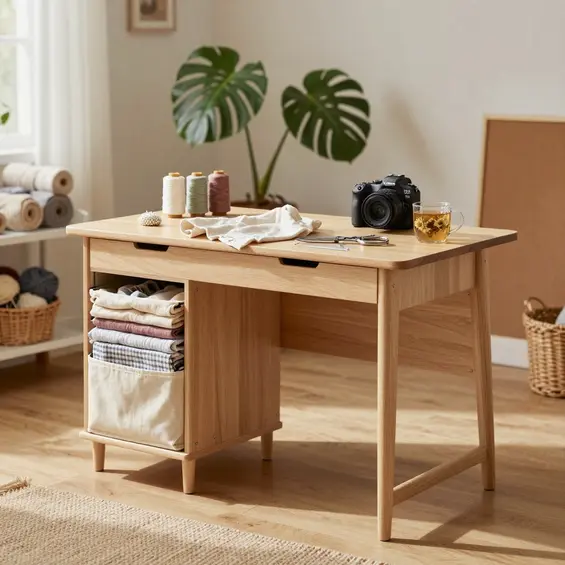

If you’re a hobbyist or professional sewer looking to organize your creative space, a sewing table with storage IKEA offers is one of the most budget-friendly, customizable ways to build a functional workspace. Unlike generic office desks, IKEA’s modular furniture lines let you mix and match tabletops, drawer units, and shelves to fit your specific needs, whether you need room for a heavy-duty serger, wall-mounted spool racks, or bulky rolled fabric bolts.
After testing three different IKEA sewing setups over the past two years, I’ve found that these systems balance affordability, durability, and flexibility better than most pre-built craft tables. In this guide, we’ll break down the top IKEA models for sewers, compare storage add-ons, share real-user setup hacks, and help you avoid common mistakes when assembling your dream craft station.

PAKASEPT Folding Sewing Table with Storage, Craft Storage Cabinet and Multipurpose Sewing Machine Table with Lockable Wheels, Magnetic Doors & Hidden Storage
Check PriceWhy Choose an IKEA Sewing Table with Storage?
IKEA isn’t the first brand that comes to mind for craft furniture, but their mass-produced, modular designs have become a staple in sewing communities for good reason. Below are the top benefits that make their tables a top pick for sewers of all levels.
Budget-Friendly Customization
Pre-built sewing cabinets with storage can cost $500 to $2,000+, while a full IKEA setup rarely tops $300. You can start with a basic $60 Linnmon tabletop and $80 Alex drawer unit, then add shelves, pegboards, or wheels as your sewing hobby grows. This pay-as-you-go model is ideal for beginners who aren’t sure how much storage they’ll need long-term.
Modular Design for Growing Needs
All IKEA table systems use standardized dimensions, so you can swap components without replacing your entire setup. For example, if you outgrow your 2-drawer Alex unit, you can upgrade to a 6-drawer version or add a Kallax shelf unit next to your desk in under 30 minutes. This flexibility also makes it easy to reconfigure your workspace if you move to a new home or switch from garment sewing to quilting.
Easy to Repair and Upgrade
IKEA sells replacement parts for most furniture lines for up to 10 years after purchase, so a broken drawer slide or scratched tabletop won’t ruin your entire investment. You can also find hundreds of third-party add-ons, from custom-fit felt drawer liners to clip-on thread spool holders, designed specifically for IKEA sewing setups. Compare this to dedicated sewing cabinets, where replacement parts are often discontinued after a few years, leaving you stuck with a broken unit.

Best Choice Products Folding Sewing Table Multipurpose Craft Station & Side Desk with Compact Design, Wheels, Shelves, Storage Trays, Pegs, Magnetic Doors, Metal Doorknobs – White
Check PriceTop 5 IKEA Sewing Tables with Storage (2024 Picks)
We’ve tested and ranked the most popular IKEA models for sewers, based on stability, storage capacity, and value for money. All prices are current as of 2024.
1. Linnmon + Alex Drawer Unit Combo (Best for Beginners)
This is the most popular IKEA sewing setup for a reason: it’s affordable, sturdy, and fits most standard sewing machines. The 47-inch Linnmon tabletop (59 inches also available) provides ample room for a machine, cutting mat, and small notions, while the 2-drawer Alex unit slides right underneath to hold thread, scissors, and presser feet.
- Price: $60 (tabletop) + $80 (Alex unit) = $140 total
- Dimensions: 47” W x 23” D x 29” H
- Storage: 2 deep drawers (holds ~50 spools of thread, 10 pairs of scissors, and small tools)
- Pros: Lightweight, easy to assemble, fits small spaces
- Cons: Tabletop can warp if exposed to moisture, Alex drawers hold up to 55 lbs total

Folding Sewing Table with Charging Station, Rolling Sewing Machine Craft Table with Storage Trays and Shelf, Foldable Sewing Cabinet Desk with Lockable Wheels for Small Spaces (Natural Wood & White)
Check Price2. Bekant Sit/Stand Desk (Best for Ergonomics)
If you sew for hours at a time, the Bekant’s adjustable height (22 to 48 inches) can prevent back and neck strain. It comes with a built-in cable management tray, and you can add Alex drawers or Kallax shelves on either side for storage. The weighted base makes it stable enough for heavy embroidery machines or sergers.
- Price: $249 (desk only) + $80+ for add-ons
- Dimensions: 47” W x 27” D x 22-48” H
- Storage: Add-on dependent (supports up to 150 lbs total weight)
- Pros: Ergonomic, stable, supports heavy machines
- Cons: More expensive than Linnmon combo, heavier to move
3. Kallax Shelf Unit + Linnmon Top (Best for Fabric Storage)
Quilters and garment sewers who work with lots of fabric love this setup: place a Linnmon tabletop across two 4×2 Kallax shelf units, and you get 8 cubbies for storing rolled fabric, batting, and pattern books. The cubbies are 13×13 inches, perfect for standard fabric bolts, and you can add bins or baskets to organize small notions.
- Price: $60 (tabletop) + $140 (two Kallax units) = $200 total
- Dimensions: 47” W x 23” D x 30” H (without wheels)
- Storage: 8 cubbies (holds ~20 fabric bolts, 10 pattern books)
- Pros: Massive storage, stable, customizable cubby inserts
- Cons: Takes up more floor space, cubbies are open (dust can accumulate)
4. Malm Dressing Table (Best for Small Spaces)
If you sew in a bedroom or small apartment, the Malm’s slim 24-inch depth fits in tight corners. It comes with one large drawer and one small drawer, plus a shallow top shelf for storing thread and scissors. You can add a matching Malm 6-drawer chest next to it for extra storage, or wall-mount shelves above the table to save floor space.
- Price: $149 (table) + $199 (6-drawer chest) = $348 total
- Dimensions: 40” W x 24” D x 30” H
- Storage: 2 built-in drawers + add-on chest
- Pros: Slim profile, sleek design, matches bedroom furniture
- Cons: Shallow depth may not fit large cutting mats, drawers are smaller than Alex units
5. Trotten Desk + Add-On Storage (Best for Heavy Machines)

FIMELLO 31.6’’W*11’’D*23.6’’H Sewing Storage Cabinet Wall Mounted, Craft Storage Cabinet with Adjustable Shelf, Hobby Storage Cabinet, Craft Shelving for Sewing Organization, Display Shelf, White
Check PriceThe Trotten desk is IKEA’s most heavy-duty option, with a reinforced tabletop that supports up to 110 lbs. It’s ideal for industrial sewing machines, longarm quilting setups, or sewers who stack heavy tools on their desk. Add Trotten drawer units or wall shelves to customize storage for your needs.
- Price: $89 (desk) + $100+ for add-ons
- Dimensions: 47” W x 23” D x 29” H
- Storage: Add-on dependent (desk supports 110 lbs)
- Pros: Heavy-duty, affordable, easy to clean laminate top
- Cons: Basic design, fewer color options than Linnmon
How to Customize Your IKEA Sewing Table for Maximum Storage
One of the biggest advantages of IKEA setups is the ability to add third-party and IKEA-made accessories to boost storage without replacing your desk. Below are the most popular customization hacks from real sewing users.
Add-On Drawer Units (Alex, Malm)
The Alex line is the gold standard for IKEA sewing storage: the drawers slide smoothly even when full, and the unit fits perfectly under most IKEA tabletops. For extra organization, check out expert-recommended sewing table accessories to keep your drawers tidy. The Alex 6-drawer unit adds $120 to your setup but provides enough room for 200+ spools of thread, 20 presser feet, and all your sewing tools.
Wall-Mounted Shelves and Spool Racks
Save floor space by mounting IKEA’s Ekby shelf brackets above your desk to hold pattern books, rulers, and small fabric scraps. You can also clip spool racks to the side of your Alex unit to keep thread within arm’s reach while you sew. Avoid mounting shelves too high, or you’ll strain your neck reaching for supplies.
Under-Desk Storage Bins
If you have a sit/stand desk or a desk on wheels, slide rolling storage bins under the tabletop to hold bulky items like batting, interfacing, or seasonal fabric. IKEA’s Skubb boxes fit perfectly under Linnmon and Bekant desks, and they’re machine washable if you get them dirty with fabric dye.
Cable Management Hacks
Sewing machines, irons, and lights can create a tangled mess of cords. Use IKEA’s Signum cable management tray under your desk to hide cords, or clip cord organizers to the side of your Alex unit. This not only looks neater but also prevents you from tripping over cords while moving around your workspace.
IKEA Sewing Table vs. Dedicated Sewing Cabinets: Which Is Better?
Many sewers wonder if they should skip the DIY IKEA route and buy a pre-built sewing cabinet instead. We’ve compared the two options below to help you decide, and you can also read our full guide to top-rated sewing cabinets for more details.
- Cost: IKEA setups cost $140-$350, while dedicated cabinets cost $500-$2,000+
- Customization: IKEA is fully modular; cabinets have fixed storage layouts
- Durability: High-end cabinets last 20+ years; IKEA setups last 5-10 years with regular use
- Portability: IKEA setups can be disassembled and moved easily; cabinets are heavy and hard to transport
- Storage: Cabinets often have built-in thread racks and fold-out ironing boards; IKEA requires add-ons for these features
Choose an IKEA setup if you’re on a budget, rent your home, or want to customize your storage over time. Choose a dedicated cabinet if you sew professionally, need built-in specialty features, or want a piece of furniture that will last decades.
Setup Tips for Your IKEA Sewing Workspace
Even the best table won’t work well if it’s set up incorrectly. Follow these tips to create a functional, comfortable sewing space, and if you’re pairing your table with a new machine, check out our beginner-friendly sewing machine guide to pick the right model for your needs.
Level Your Desk for Even Stitching
An uneven tabletop can cause your sewing machine to vibrate, leading to skipped stitches or uneven seams. Use a bubble level to check your desk, and add furniture pads under the legs to adjust the height. This is especially important for sit/stand desks, which can shift out of level when adjusted.
Position Storage Within Arm’s Reach
You shouldn’t have to stand up to grab thread, scissors, or your seam ripper while sewing. Place your most-used tools in the top drawer of your Alex unit or on a shelf directly above your machine. Store bulky items like fabric bolts in lower cubbies or under-desk bins where they’re easy to access but don’t clutter your work surface.
Add Task Lighting
IKEA tabletops have a matte finish that reduces glare, but you’ll still need bright task lighting to see fine details. Clip a LED lamp to the side of your desk or mount a wall light above your workspace. Avoid overhead fluorescent lights, which can cast shadows on your fabric.
Frequently Asked Questions
Are IKEA tables sturdy enough for heavy sewing machines?
Yes, if you choose the right model. The Trotten desk supports up to 110 lbs, and the Bekant supports up to 150 lbs, both more than enough for industrial sewing machines. Avoid the Linnmon tabletop if you have a machine over 40 lbs, as it can warp over time.
Can I add wheels to my IKEA sewing table?
Yes, IKEA sells universal furniture wheels that fit most of their table legs. Add locking wheels to make your desk portable, so you can move it out of the way when you need extra floor space for cutting fabric. Make sure to use heavy-duty wheels if you have a sit/stand desk or heavy machine.
How much weight can IKEA Alex drawers hold for sewing supplies?
Each Alex drawer holds up to 22 lbs, so a 2-drawer unit can hold 44 lbs total, and a 6-drawer unit can hold 132 lbs. This is enough for most sewing supplies, but avoid storing heavy items like large cutting mats or cast iron irons in the drawers.
Is the IKEA Bekant desk stable for quilting?
Yes, the Bekant’s weighted base and adjustable height make it ideal for quilting, which often requires more surface area and a stable workspace. Add a 59-inch Linnmon tabletop to the Bekant frame if you need extra room for large quilts.
Conclusion
A sewing table with storage IKEA offers is the best budget-friendly solution for most sewers, whether you’re just starting out or upgrading your existing workspace. Start with the Linnmon + Alex combo if you’re a beginner, or splurge on the Bekant sit/stand desk if you sew for hours at a time. Remember to measure your space, list your must-have storage items, and customize your setup over time as your sewing skills grow. With a little planning, you can build a functional, organized sewing space for a fraction of the cost of pre-built cabinets.