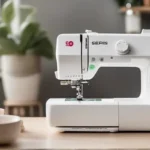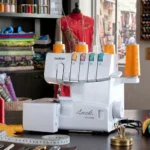

If you’ve been browsing high-end serger listings or chatting with experienced sewists, you may have come across the term and wondered: What is an air thread overlocker? Put simply, it’s a specialized type of overlock machine that uses built-in compressed air to thread the loopers automatically, eliminating the fiddly manual threading process that many standard overlockers require.
Whether you’re a beginner tired of struggling with looper threads or an intermediate sewist looking to upgrade your workflow, this guide will break down everything you need to know about this tool.

Janome AirThread 2000D Serger – One-Push Air Threading with Versatile Conversion
Check PriceHow Does an Air Thread Overlocker Work?
Unlike standard overlockers, which require you to manually guide thread through tiny looper eyes using tweezers or threading hooks, air thread overlockers use a small built-in air compressor to pull thread through the loopers in seconds. This system is often called automatic looper threading or air threading technology, and it’s most commonly found on mid-range to high-end serger models from brands like Brother, Juki, and Janome.
For context on how this fits into the broader world of overlock machines, you can refer to our guide to compare sergers, overlockers, and coverstitch machines, or review this authoritative serger basics guide from the Sewing & Craft Alliance for foundational knowledge.

Bernette B64 Airlock Serger
Check PriceKey Components of an Air Thread System
Every air thread overlocker has four core components that make the automatic threading process possible:
- Built-in air compressor: A small, quiet pump that generates compressed air to push thread through the loopers. Most home models use a replaceable compressed air canister, while industrial versions may connect to an external air line.
- Threading ports: Color-coded slots on the front or side of the machine where you insert each thread spool’s tail before activating the air thread function.
- Looper channels: Internal tubes that connect the threading ports to the looper eyes, designed to fit standard overlock thread diameters.
- One-touch activation button: A dedicated button or lever that triggers the air compressor to push thread through all loopers at once, or individually if you prefer.
Step-by-Step: Threading an Air Thread Overlocker
Threading an air thread overlocker takes a fraction of the time of a standard overlocker. Here’s the typical process:
- Insert your thread spools onto the spool pins, following the color-coded guide on the machine.
- Guide each thread tail through the pre-tension discs and up to the corresponding threading port on the front of the machine.
- Insert each thread tail into the threading port until it clicks into place.
- Press the air thread activation button. You’ll hear a short burst of air, and the thread will be pulled through the looper eye automatically.
- Pull the thread tail from the looper and guide it to the needle, then thread the needles manually (most air thread models still require manual needle threading, though some high-end versions include automatic needle threading too).
Most users can complete this entire process in under 2 minutes, compared to 10+ minutes for a standard overlocker with multiple loopers.
Air Thread Overlocker vs Standard Overlocker: Key Differences

Brother AIRFLOW 3000 Air Thread Serger
Check PriceThe core function of both machines is identical: they use 2-5 threads to overlock fabric edges, prevent fraying, and create stretchy seams for knit fabrics. The only difference is the threading mechanism. Here’s how they stack up across common decision factors:
Threading Process
Standard overlockers require you to manually thread each looper using a small threading hook or tweezers. This is notoriously fiddly, especially for beginners, as looper eyes are tiny and often located in hard-to-reach areas of the machine. Air thread overlockers eliminate this step entirely, making threading accessible to sewists with limited dexterity or vision.
Cost Comparison
Air thread overlockers are significantly more expensive than standard models. Entry-level standard overlockers start at around $150, while the cheapest air thread models start at $400, with high-end versions costing $1,500 or more. You’re paying for the convenience of the air threading system, plus additional features like automatic tension adjustment and programmable stitch settings that often come bundled with air thread models.
Long-Term Maintenance
Standard overlockers have fewer moving parts, so they tend to require less maintenance over time. Air thread models have a small air compressor and internal tubing that can clog with lint if not cleaned regularly. Most home models use replaceable air canisters that need to be swapped every 1-2 years depending on usage, adding a small recurring cost.
Top 5 Benefits of Using an Air Thread Overlocker

Bernette B68 Airlock Serger
Check PriceIf you’re on the fence about investing in an air thread model, here are the most commonly cited benefits from experienced users:
- Saves time on setup: You’ll spend less time threading and more time sewing, especially if you switch thread colors frequently for different projects.
- Reduces frustration for beginners: Threading loopers is the #1 complaint new serger users have. Air threading removes this barrier to entry entirely.
- Better for users with dexterity issues: If you have arthritis, limited hand mobility, or vision impairments, air threading is far easier to manage than manual threading.
- Consistent threading every time: Manual threading can lead to skipped loops or uneven tension if the thread isn’t seated correctly. Air threading pulls thread through the looper channel evenly every time.
- Bundled advanced features: Most air thread overlockers come with additional perks like automatic tension adjustment, differential feed control, and built-in rolled hem settings that are often sold as add-ons for standard models.
Who Should Invest in an Air Thread Overlocker?
Air thread overlockers aren’t necessary for every sewist, but they’re a great fit for:
- Beginners who are intimidated by standard sergers: If you’ve put off buying a serger because you’re worried about threading, an air thread model removes that stress.
- Sewists who use their serger weekly: If you serge multiple projects a week, the time saved on threading adds up quickly.
- Production sewers or small business owners: If you’re sewing garments to sell, faster setup times mean higher productivity.
- Users with limited dexterity or vision: As mentioned earlier, air threading is far more accessible for sewists with physical limitations.
If you’re still unsure if a serger is right for you at all, our guide to decide if a serger is worth adding to your sewing setup can help you weigh the pros and cons for your specific needs.
Common Drawbacks to Consider
No tool is perfect, and air thread overlockers have a few downsides to keep in mind before purchasing:
- Higher upfront cost: You’ll pay 2-3x more for an air thread model than a comparable standard overlocker.
- Recurring canister costs: Most home air thread models use replaceable air canisters that cost $10-$20 to replace every 1-2 years.
- More complex repairs: If the air compressor or tubing breaks, you’ll need a technician familiar with air thread systems, which can be more expensive than standard serger repairs.
- Heavier and bulkier: The built-in air compressor adds weight and size to the machine, so it’s less portable than a standard overlocker.
Frequently Asked Questions
Do all sergers have air threading?
No, air threading is a premium feature found only on mid-range to high-end overlocker models. Most entry-level sergers require manual looper threading.
How long does the air canister last?
Most home air thread overlocker canisters last 1-2 years with regular weekly use. Heavy daily use may require replacement every 6-12 months.
Can I use regular overlock thread in an air thread overlocker?
Yes, air thread overlockers are designed to work with standard overlock thread (typically 40wt or 50wt polyester or cotton thread). Avoid using very thick specialty threads, as they may not fit through the looper channels.
Is an air thread overlocker good for beginners?
Yes, many beginners prefer air thread models because they remove the most frustrating part of learning to use a serger: threading the loopers. However, the higher cost may be a barrier for new sewists who aren’t sure if they’ll use the machine long-term.
How much does an air thread overlocker cost?
Entry-level air thread overlockers start at around $400, while mid-range models cost $600-$1,000. High-end industrial-grade air thread sergers can cost $2,000 or more.
Conclusion
So, what is an air thread overlocker? It’s a game-changing tool for sewists who want to skip the frustration of manual looper threading and speed up their workflow. While the higher cost may not make sense for occasional sewers, it’s a worthwhile investment for regular users, beginners intimidated by standard sergers, and those with dexterity limitations.
Before making a purchase, consider how often you’ll use the machine, your budget, and whether the time saved on threading justifies the extra cost. If you’re still on the fence about buying a serger at all, check out our guide to decide if a serger is right for your skill level and budget to make an informed decision.