
If you’re looking for a kitchen towel sewing pattern, you’ll love the creative freedom it offers! Start with basic patterns for beginners, perfect for mastering essential skills. Choose from a variety of fabrics like absorbent cotton or breathable linen to suit your needs. Don’t forget to personalize your towels with vibrant prints or unique embroidery! When you’re ready to elevate your sewing experience, there are advanced patterns and tips waiting to inspire your next project!
Benefits of Sewing Your Own Kitchen Towels
When you sew your own kitchen towels, not only do you release your creativity, but you also gain the satisfaction of crafting something uniquely yours.
This practice embodies sustainable sewing, allowing you to choose eco-friendly fabrics and reduce waste. By repurposing materials or utilizing remnants, you create budget-friendly projects that won’t strain your wallet.
Each stitch becomes an expression of your style, whether you opt for vibrant patterns or calming neutrals. Furthermore, sewing your towels means you can customize their size and absorbency to suit your kitchen needs.
There’s something fulfilling about knowing your towels are made with care, giving you a sense of pride every time you reach for one. Embrace the art of sewing and transform your kitchen today!
Essential Tools and Materials for Your Project
To begin your kitchen towel sewing adventure, you’ll need a few essential tools and materials that will make the process smooth and enjoyable. Here’s a quick overview of what you should gather:
| Sewing Essentials | Description |
|---|---|
| Sewing Machine | A reliable machine for easy stitching. |
| Fabric Scissors | Sharp scissors for clean cuts. |
| Measuring Tape | Accurate measurements are key. |
Having these tools on hand will set you up for success. Don’t forget to choose your fabric selection wisely, as it will influence the durability and aesthetic of your towels. With the right sewing essentials, you’ll be well on your way to creating beautiful, functional kitchen towels!
Choosing the Right Fabric for Kitchen Towels
What fabric should you choose for your kitchen towels? The best options are cotton and linen, known for their absorbency and durability. Cotton’s soft texture makes it ideal for drying dishes, while linen’s natural fibers provide excellent lint-free drying. When considering fabric types, remember that terry cloth adds extra absorbency, perfect for heavy-duty use.
Now, let’s talk about color choices. Bright, cheerful patterns can liven up your kitchen, while neutral tones offer versatility and elegance. Don’t shy away from seasonal prints, either; they can add a festive touch. Just make sure the colors won’t fade after washing. Ultimately, your fabric selection should balance functionality with aesthetics for the perfect kitchen towels!
Simple Sewing Patterns for Beginners
Choosing the right fabric for your kitchen towels sets the stage for a successful sewing project, especially if you’re just starting out. Simple sewing patterns can help you master basic sewing techniques while enjoying the process.
Here’s a quick guide to beginner fabric choices:
| Fabric Type | Pros | Cons |
|---|---|---|
| Cotton | Absorbent & durable | Can shrink |
| Linen | Strong & breathable | Wrinkles easily |
| Terry Cloth | Highly absorbent | Can be bulky |
Advanced Patterns for Experienced Sewers
While beginners often focus on mastering basic techniques, experienced sewers can elevate their skills with advanced patterns that challenge creativity and precision. You might explore intricate designs that incorporate various fabric types, like linen and cotton blends, to enhance texture and durability.
Advanced techniques, such as French seams or bias binding, can give your kitchen towels a professional finish. Don’t hesitate to experiment with pattern modifications; altering dimensions or adding unique pockets can transform a simple towel into a functional piece of art.
Consider integrating contrasting fabrics for visual interest, or use decorative stitching to emphasize your design. These elements not only showcase your talent but also create custom pieces that reflect your personal style and flair.
Customizing Your Kitchen Towels With Embroidery
After mastering advanced sewing techniques, adding embroidery to your kitchen towels can elevate your creations even further. Start by selecting the perfect embroidery fonts that reflect your personal style. For instance, playful script fonts can add a whimsical touch, while bold block letters can give a modern feel.
Consider incorporating kitchen themes, such as utensils, fruits, or herbs, to create a cohesive look. Use a stabilizer to guarantee your fabric maintains its shape during the embroidery process, and experiment with thread colors that pop against your towel fabric. Once you’ve designed your layout, take your time to embroider each detail carefully, ensuring clean lines and consistent tension. The result will be unique kitchen towels that showcase your creativity and sewing prowess!
Creative Ways to Use Leftover Fabric
Got leftover fabric from your kitchen towel project? Why not transform those scraps into charming patchwork kitchen towels or whimsical coasters? With just a bit of creativity and some simple sewing techniques, you can turn those remnants into functional art that brightens up your space.
Patchwork Kitchen Towels
If you’ve ever found yourself with an assortment of leftover fabric scraps, turning them into patchwork kitchen towels can be a delightful solution. Start by selecting a variety of fabrics that complement each other through color coordination.
Using patchwork techniques like squares, triangles, or even strips, you can create unique patterns that add a personal touch to your kitchen. Begin by cutting your scraps into uniform sizes, then arrange them to see how they work together visually.
Once you’re satisfied with the layout, sew the pieces together, ensuring you maintain proper seam allowances for durability. Finally, finish by adding a backing fabric, and consider topstitching for added flair. These towels are not just functional; they’re a creative expression of your sewing skills!
Fabric Scraps Coasters
Creating fabric scraps coasters is a fantastic way to give new life to those leftover fabric pieces cluttering your sewing room. With just a bit of creativity, you can transform tiny bits of fabric into adorable and functional scrap fabric coasters. Start by cutting your scraps into squares or circles, ensuring they’re all the same size for uniformity.
Layer two pieces together, right sides facing, and sew around the edges, leaving a small gap for turning. After turning them inside out, fill with a bit of batting for added absorbency, then stitch the gap closed. Decorate with quilting or contrasting thread for flair. These coaster sewing projects not only reduce waste but also add a personal touch to your home decor!
Tips for Proper Care and Maintenance of Your Towels
To keep your kitchen towels looking fresh and performing at their best, it’s vital to follow specific washing instructions and temperature guidelines. Proper drying techniques can enhance their absorbency, while smart storage solutions will maintain their shape and functionality. Let’s explore these essential care tips to guarantee your handmade towels remain a staple in your kitchen for years to come.
Washing Instructions and Temperature
While you may be keen to use your freshly sewn kitchen towels, proper washing and care are essential for ensuring their longevity and functionality. To maintain their vibrant colors and absorbency, start by using cold or warm water—generally, washing temperatures between 30°C and 40°C (86°F to 104°F) work best.
Avoid hot water, as it can cause shrinkage and fading. Use a gentle detergent free of harsh chemicals to protect the fabric’s integrity. For patterned or delicate fabrics, consider a gentle cycle to minimize wear. Always test any stain removers on a small, inconspicuous area first. By following these fabric care guidelines, you’ll keep your kitchen towels looking as good as new while enhancing their lifespan.
Drying Techniques and Tips
When it comes to drying your kitchen towels, opting for the right technique can greatly extend their lifespan and maintain their absorbency. Air drying is a fantastic method, especially for cotton and linen towel fabrics, as it prevents shrinkage and retains softness. If you prefer using a dryer, select a low heat setting to avoid damaging the fibers.
For microfiber towels, you should skip fabric softeners, which can reduce absorbency. Always remove towels promptly to prevent mustiness. To keep them fluffy and effective, toss in a clean tennis ball during the drying cycle. By following these drying techniques, you’ll guarantee your kitchen towels remain in peak condition, ready to tackle any mess.
Storing Towels Properly
Properly storing your kitchen towels is essential for maintaining their freshness and functionality. Start by folding them neatly to avoid wrinkles and creases. You might want to reflect on towel organization methods like stacking them in a dedicated drawer or using decorative bins on shelves.
This not only keeps your kitchen storage tidy but also makes it easy to grab a towel when you need one. For longer-lasting towels, avoid overcrowding them, as this can trap moisture and lead to odors. If you have space, hang a few towels on hooks to allow for better air circulation. Finally, keep your towels away from direct sunlight to prevent fading. With these simple steps, your kitchen towels will stay fresh and ready for action!
Gift Ideas: Handmade Kitchen Towels for Friends and Family
If you’re looking for a thoughtful and practical gift, handmade kitchen towels can be a delightful choice for friends and family. These unique kitchen accessories not only add charm to any home but also showcase your creativity and care. Here are three ideas to spark your inspiration:
- Seasonal Patterns: Create towels featuring festive designs for holidays, making them a joyful addition to any kitchen.
- Personalized Embroidery: Add initials or meaningful quotes, turning ordinary towels into cherished handmade gifts.
- Eco-Friendly Fabrics: Use sustainable materials, appealing to environmentally-conscious friends and family while promoting a greener lifestyle.
Inspiring Designs to Spark Your Creativity
When you’re ready to release your creativity, think about how vibrant fabric combinations can breathe life into your kitchen towels. Imagine pairing playful patterns with bold colors, or incorporating fun embroidery techniques that transform simple designs into eye-catching pieces. You can even experiment with unique shapes, turning a basic towel into a charming statement that reflects your personal style.
Colorful Fabric Combinations
As you immerse yourself in the world of kitchen towel sewing, the right fabric combinations can transform a simple project into a vibrant work of art. Consider these ideas to inspire your creativity:
- Bold Geometrics: Pair vibrant patterns like polka dots or stripes with solid colors. This contrast adds depth and excitement to your towels.
- Seasonal Themes: Embrace fabrics featuring seasonal motifs—think autumn leaves or cheerful florals in spring. These designs can bring a festive touch.
- Textured Layers: Combine cotton with linen or terry cloth for functionality and visual interest. Textures can elevate the overall aesthetic, making your towels both beautiful and practical.
Experimenting with these colorful fabric combinations will ignite your creativity and make each kitchen towel uniquely yours!
Fun Embroidery Techniques
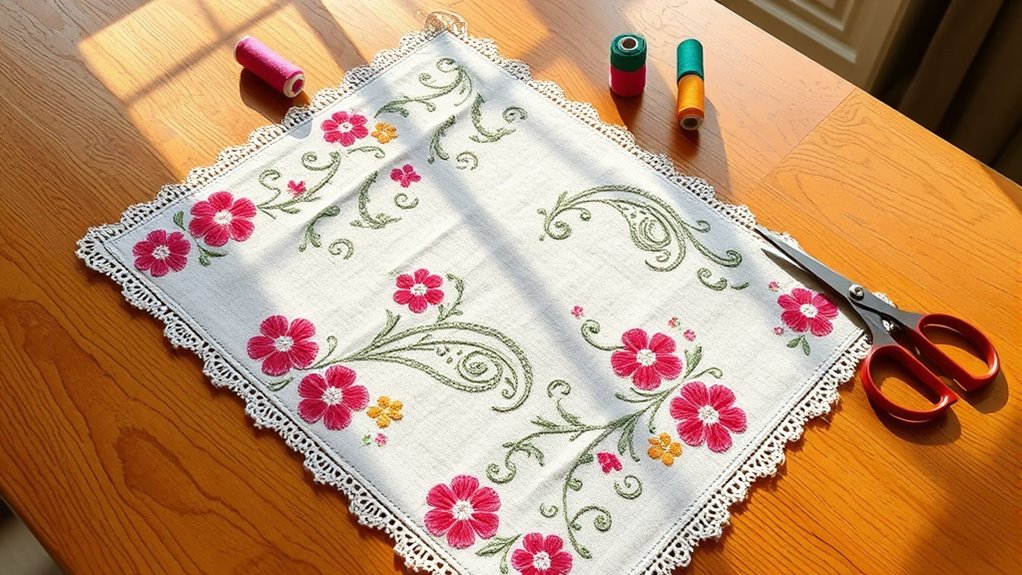
While diving into the world of kitchen towel sewing, incorporating fun embroidery techniques can elevate your creations to a whole new level. Explore various embroidery styles, like whimsical florals or playful geometric patterns, to add a personal touch.
Experimenting with decorative stitches, such as satin stitch or chain stitch, can create texture and depth in your designs. Don’t hesitate to mix techniques; combining hand embroidery with machine stitching can yield stunning results.
You could even try adding monograms for a customized flair. Remember to choose contrasting thread colors to make your designs pop against the fabric. Let your creativity flow as you stitch, transforming simple towels into vibrant, functional art pieces that reflect your unique personality.
Unique Shape Ideas
After adding your unique touch with embroidery, consider how the shape of your kitchen towels can enhance their appeal and functionality. Unique shapes can transform ordinary towels into eye-catching kitchen accessories. Here are three creative patterns to inspire you:
- Bistro Style: Create a towel shaped like a classic bistro apron, complete with pockets for utensils.
- Fruit Slice: Design towels in the shape of citrus slices, bringing a pop of color and fun to your kitchen decor.
- Animal Shapes: Sew towels resembling your favorite animals, perfect for adding whimsy to your cooking space.
These unique shapes not only serve practical purposes but also spark joy and creativity in your kitchen. Get inspired and let your imagination run wild!
Frequently Asked Questions
How Long Does It Take to Sew Kitchen Towels?
Sewing kitchen towels usually takes about one to two hours. With effective time management and a clear plan, you can enhance project efficiency, allowing you to enjoy the process and create beautiful, functional pieces.
Can I Use Old Fabric for Kitchen Towels?
Absolutely, you can use old fabric for kitchen towels! Just verify it’s durable enough for drying. Upcycling fabric not only gives your towels character but also promotes sustainability—making it a creative and practical choice!
What Is the Best Thread Type for Kitchen Towels?
You’ll want to choose cotton thread for absorbency and natural feel, or polyester thread for durability and strength. Both options offer unique benefits, so select based on your kitchen towel’s intended use and desired longevity.
Are There Specific Sewing Machines Recommended for This Project?
For this project, look for sewing machines with strong stitch capabilities and adjustable presser feet. Budget-friendly options like the Brother CS6000i or Singer 4423 offer excellent features, ensuring your kitchen towel sewing is smooth and enjoyable.
How Do I Prevent Fraying Edges on My Towels?
To prevent fraying edges on your towels, consider using fabric treatments like fray check. Additionally, employing edge finishes such as zigzag stitching or serging will secure the fabric and keep those edges looking neat and tidy.