
Finding the right tracing paper can make or break your sewing project. Flimsy paper tears, thick paper hides pattern lines, and the wrong type won’t let you see the fabric underneath. You need a reliable medium that’s translucent enough to trace intricate details yet durable enough to survive pinning and cutting.
Short Answer: The best overall choice for most sewists is the Swedish Tracing Paper – Sewing Transfer Paper. It behaves like fabric, is strong enough to stitch through for toiles, and provides exceptional clarity. This versatile roll handles everything from delicate garment patterns to sturdy craft templates with ease.

Swedish Tracing Paper – Sewing Transfer Paper
Check PriceBest Tracing Paper For Sewing of 2026
To select the finest tracing paper, it pays to first understand what sewing pattern paper is and how its weight and transparency affect your work. For deeper insight into why these sheets are designed the way they are, the Wikipedia entry on sewing patterns explains the evolution of pattern materials and the standards that make tracing a dependable step in garment making.
1. Tracing Paper Roll 18″ x 30 yd – Versatile and economical for pattern drafting

Tracing Paper Roll – 18″ x 30 yd
Check PriceWhy it stands out
This 18-inch wide roll gives you plenty of room to trace standard pattern pieces without splicing. The translucent white paper offers excellent visibility while remaining budget-friendly. It feeds smoothly under a tracing wheel and won’t yellow quickly like cheap alternatives.
Key points
- Dimensions: 18 inches wide by 30 yards long
- Translucent white medium-weight paper
- Works with pencils, pens, and tracing wheels
- Roll format for continuous, seam-free sheets
Pros
- Excellent transparency for detailed patterns
- Long roll reduces refill frequency
- Accepts both dry and wet media cleanly
- Lightweight yet resists tearing during handling
- Great value for high-volume sewers
Cons
- Does not include a cutting guide or grid
- May curl if stored in dry environments
Best for
Home sewists who need an all-purpose tracing medium for garment patterns, quilting templates, and occasional drafting work. It strikes a smart balance between width and manageability.
2. Tracing Paper Roll 24″ x 30 yd – Ideal width for garment patterns

Tracing Paper Roll – 24″ x 30 yd
Check PriceWhy it stands out
At 24 inches wide, this translucent roll accommodates larger pattern pieces like full skirts and bodice panels without taping. The paper balances thinness for tracing with enough strength to endure repeated pinning. It lays flat immediately after unrolling.
Key points
- Generous 24-inch width for broad layouts
- 30-yard continuous roll for extended use
- Supple, translucent surface ideal for tracing wheels
- Also suitable for wrapping and sketching
Pros
- Wide enough for most commercial patterns
- Sturdy yet see-through for precise lines
- Does not crack when folded lightly
- Works with markers without bleeding through
- Comes in protective packaging to prevent edge damage
Cons
- Slightly heavier than Swedish-style papers
- Transparency varies under very bright light
Best for
Sewers who regularly work with multi-size pattern sheets and need a wider tracing surface. It eliminates the hassle of joining narrower strips mid-project.
3. Tracing Paper Roll 17″ × 25 yd – Compact size for small projects

Tracing Paper Roll – 17″ x 25 yd
Check PriceWhy it stands out
This 17-inch roll is perfect for children’s clothing, accessories, and quilting blocks that don’t require enormous sheets. Its crisp white translucency ensures your traced lines stay visible against both light and dark fabrics. The modest yardage fits neatly in a craft drawer.
Key points
- Dimensions: 17 inches wide by 25 yards long
- Clean white paper with high translucency
- Thin enough for precise tracing, tough enough for pinning
- Roll format prevents creases during storage
Pros
- Easy to handle on smaller cutting mats
- Affordable price for beginners
- Excellent clarity under pattern tissue
- Writable with graphite, charcoal, and ballpoint
- Lightweight for mailing finished patterns
Cons
- Narrower roll limits large garment tracing
- Thinner stock may wrinkle if overly handled
Best for
Crafters who focus on doll clothes, bags, and small pattern adjustments. The compact size reduces waste and storage space.
4. Tracing Paper Roll 36 Inches x 30 Yards – Large format for professional designs

Tracing Paper – 36″ x 30 yd
Check PriceWhy it stands out
When you need to preserve an entire uncut pattern sheet, this 36-inch-wide roll is a game changer. The expansive surface covers plus-size garments, drapery patterns, and upholstery templates in one piece. The paper maintains a uniform translucency across its width.
Key points
- Width: 36 inches, Length: 30 yards
- Thick enough to use with a tracing wheel repeatedly
- Works for sewing, drawing, and sketching projects
- Crisp white surface highlights fine pencil marks
Pros
- Oversized width eliminates seams in templates
- Substantial roll lasts through multiple large projects
- Good opacity control for layering
- Tears cleanly along a straight edge
- Does not transfer carbon smudges easily
Cons
- Bulkier roll requires dedicated storage space
- Slightly pricier than narrower options
Best for
Professional dressmakers, costume designers, and home decor sewists who need oversized pattern sheets. The generous dimensions save time and improve accuracy.
5. Tracing Paper Roll 36″ x 35 yd – Extra-long roll for bulk projects

Tracing Paper Roll – 36″ x 35 yd
Check PriceWhy it stands out
With an extra 5 yards of length, this 36-inch roll keeps you supplied through a busy season of pattern making. The translucent paper feels slightly softer than typical drafting sheets, making it friendlier for folding and storing fitted muslins. It resists tearing even when you stitch directly through it.
Key points
- Size: 36 inches wide, 35 yards long
- Supple, fabric-like translucency
- Suitable for tracing, sketching, and gift wrapping
- Uniform thickness with no thin spots
Pros
- Generous yardage for long-term workshops
- Can be sewn to test garment fit
- Retains shape when rolled and unrolled repeatedly
- Transparency remains consistent under varying light
- Great for collaborative studio use
Cons
- Not as crisp as heavier drafting paper
- Width may be too large for tight workspaces
Best for
Sewing instructors and production sewists who go through tracing paper quickly. The extra length reduces reordering and keeps workflow uninterrupted.
6. 5 Pcs Transfer Paper – Reusable carbon sheets for easy transfer

5 Pcs Transfer Paper – Water-Soluble
Check PriceWhy it stands out
These water-soluble carbon sheets transfer crisp lines directly onto fabric using a tracing wheel. Unlike messy wax papers, the markings rinse out with plain water, leaving no residue. The pack includes five reusable sheets, so one set lasts for dozens of projects.
Key points
- Sheet size: 11 inches by 9 inches
- Water-soluble formula for easy removal
- Works on cloth, canvas, and paper
- Reusable multiple times with light pressure
Pros
- Marks disappear completely with water
- Transfers darts and notches precisely
- No smudging on light-colored fabrics
- Leaves a faint line that’s easy to follow
- Compact pack stores in a notions box
Cons
- Limited to smaller pattern sections
- Not suitable for dark or heavily textured fabric
Best for
Sewists who want a clean, temporary marking method for embroidery, cross-stitch, and garment construction without chalk dust or permanent pens.
7. Tracing Paper Roll 12″ × 25 yd – Narrow roll for precise lines

Tracing Paper Roll – 12″ x 25 yd
Check PriceWhy it stands out
This 12-inch roll is ideal for tracing sleeves, collars, and small pattern alterations where a huge sheet would be cumbersome. The slim format makes it extremely portable for classes and sewing retreats. Despite its narrow width, the paper possesses excellent tear resistance.
Key points
- Width: 12 inches, Length: 25 yards
- High translucency for intricate pattern markings
- Roll design keeps paper clean and unwrinkled
- Compatible with all standard tracing tools
Pros
- Very manageable on small tables
- Lightweight and easy to carry
- Lowest cost per roll in the lineup
- Translucency rivals wider premium rolls
- Great for tracing embroidery designs
Cons
- Narrow width requires taping for larger pieces
- Rolls may get crushed in crowded drawers
Best for
Sewers who primarily work on small-scale patterns, alterations, or craft projects and prefer a lightweight paper that is always ready to go.
8. Clover “Chacopy” Tracing Paper – Seamless fabric marking with Chacopy

Clover Chacopy Tracing Paper
Check PriceWhy it stands out
Clover’s Chacopy combines tracing paper and transfer carbon in one tidy package. It produces clear, chalk-like lines on fabric without dust, and the marks brush off or wash out effortlessly. The compact folder design protects the paper and makes it travel-ready.
Key points
- Package size: approximately 12.88 x 5.13 inches
- Carbon coating on one side transfers with pressure
- Works on a variety of fabric types and textures
- Requires a tracing wheel (sold separately)
Pros
- No-mess chalk transfer
- Marks remove easily with a brush or water
- Vibrant, visible lines on light and medium fabrics
- Durable folder keeps carbon from smudging other items
- Trusted brand known for quality sewing tools
Cons
- Smaller sheet size may require repositioning
- Single color option per pack
Best for
Sewists who want a dedicated marking paper that behaves predictably and doesn’t leave oily residues on fine fabrics like silk or lawn.
9. Tosstuki 47″ X 5 Yards Non Woven Pattern Paper – Non-woven stability for repeated use

Tosstuki 47″ x 5 Yards Non Woven Pattern Paper
Check PriceWhy it stands out
Unlike traditional tracing rolls, this non-woven paper mimics the drape of fabric while still being transparent enough to trace through. It won’t tear along fold lines and can be sewn multiple times for fitting toiles. The 47-inch width covers nearly any garment pattern in one piece.
Key points
- Material: non-woven, fabric-like paper
- Width: 47 inches, Length: 5 yards
- Sewable and pinnable without damage
- Translucency suitable for tracing over patterns
Pros
- Extremely durable even when repeatedly stitched
- Soft hand that drapes like real muslin
- Extra-wide width minimizes seams
- Holds ironed folds for crisp pattern pieces
- Marks show up clearly with pencil or pen
Cons
- Shorter yardage than standard rolls
- Slightly lower initial translucency than tissue paper
Best for
Designers who create wearable toiles and need a robust medium that stands up to fitting adjustments, basting, and repeated handling.
10. AMORNPHAN 5 Sheets 5 Colors Sewing Carbon Tracing Paper – Color-coded carbon for various fabrics
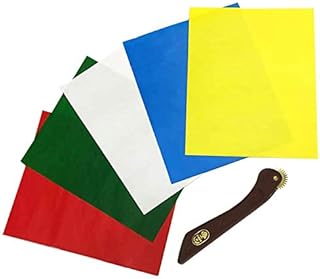
AMORNPHAN 5 Sheets 5 Colors Carbon Tracing Paper
Check PriceWhy it stands out
Get five different colors in one set, so you always have a contrasting shade that shows up on any fabric. These Japanese-made carbon sheets mark smoothly with a tracing wheel and wash out or fade with normal laundering. The kit includes a bonus tracing wheel for immediate use.
Key points
- Sheet size: 9 inches by 11 inches
- Colors: white, yellow, red, blue, and green
- Made in Japan for consistent quality
- Includes tracing wheel sewing tool
Pros
- High visibility on both light and dark fabrics
- Marks vanish with washing or fading
- Bonus tracing wheel saves an extra purchase
- Colors stay true without muddy transfer
- Sheets are reusable many times
Cons
- Small sheets limit continuous long lines
- Not water-soluble like some alternatives
Best for
Crafters and tailors who switch between fabrics often and need a versatile, color-coded transfer system with an included wheel.
11. Bienfang Sketching & Tracing Paper Roll – Premium heavyweight paper for sketching

Bienfang Sketching & Tracing Paper Roll – 36″ x 50 yd
Check PriceWhy it stands out
Bienfang is synonymous with artist-grade paper, and this 36-inch by 50-yard roll brings that quality to the sewing room. The slightly thicker stock handles erasing and redrafting without pilling. The bright white surface makes traced pencil lines stand out sharply for complex garment designs.
Key points
- Dimensions: 36 inches wide by 50 yards long
- Medium-weight tracing paper with smooth finish
- Suitable for pencil, ink, and marker work
- Acid-free for archival pattern storage
Pros
- Generous 50-yard length offers exceptional value
- Tooth accepts graphite beautifully
- Won’t become brittle over time
- Great transparency for layered design work
- Resists tearing under a sharp tracing wheel
Cons
- Heavier weight may reduce fabric-like drape
- Premium price point compared to basic rolls
Best for
Sewists who also sketch or draft original patterns and want an archival-quality paper that lasts through multiple revisions and storage.
12. Kissbuty 22 Pcs Transfer Paper and Tracing Paper – Complete transfer kit with stylus

Kissbuty 22 Pcs Transfer Paper and Tracing Paper Set
Check PriceWhy it stands out
This all-in-one bundle includes water-soluble carbon papers, translucent tracing sheets, and a dual-ended embossing stylus. You can copy embroidery patterns, sewing marks, and even wood-burning designs without hunting for separate tools. The carbon marks rinse away completely from fabric.
Key points
- 22 pieces total: transfer paper, tracing paper, stylus
- Water-soluble carbon for easy cleanup
- Works on fabric, canvas, wood, and paper
- Stylus has fine and bold tip options
Pros
- No need to buy additional tools
- Transfers crisp, dark lines with light pressure
- Sheets can be reused several times
- Safe for delicate fabrics like linen
- Stylus makes tracing patterns effortless
Cons
- Tracing paper sheets are individual, not a roll
- Stylus tips can wear with heavy use
Best for
Beginner sewists and embroidery enthusiasts who want a ready-to-use kit for transferring patterns without investing in separate supplies.
13. Swedish Tracing Paper – Sewing Transfer Paper – The gold standard Swedish tracing paper
Swedish Tracing Paper – Sewing Transfer Paper
Check PriceWhy it stands out
Swedish Tracing Paper is beloved for its fabric-like feel and incredible durability. You can stitch it, pin it, and even wash it gently without disintegration. The 29-inch width rolls out flat and stays put, giving you a true-to-life drape for fitting adjustments before cutting into expensive cloth.
Key points
- Size: 29 inches wide by 10 yards long
- Sewable, washable, and tear-resistant material
- High translucency for accurate tracing
- Works with both dry and wet marking tools
Pros
- Mimics real fabric for fitting toiles
- Does not tear when sewn with a machine
- See-through enough for intricate pattern lines
- Can be ironed on low heat to remove creases
- Widely recommended by sewing educators
Cons
- Shorter yardage compared to budget rolls
- Slightly higher price per yard
Best for
Discerning sewists who want the ultimate tracing experience and are willing to invest in a premium paper that doubles as a sewable muslin.
How to choose the best tracing paper for sewing
Start by considering the width you need for your typical projects. Narrow rolls work for children’s clothes and accessories, but adult garments often require 24 inches or more. If you frequently trace large pattern pieces, a 36-inch roll eliminates the frustration of taping sheets together.
Next, think about transparency and weight. A highly translucent paper makes it easy to see the original pattern lines below, while a slightly heavier paper holds up better to repeated pinning and folding. If you plan to sew through the paper for a fit test, opt for a sewable material like Swedish Tracing Paper or non-woven options.
Your marking method also influences the choice. Traditional translucent rolls are perfect for pencils, pens, and smooth tracing wheels. For fabric transfer tasks, dedicated carbon or Chacopy sheets mark directly onto cloth and wash away. A combined kit can give you both tracing and transfer capabilities without extra shopping.
Finally, assess storage space and project volume. A compact roll fits easily in a drawer, while a large 50-yard roll offers long-term economy but demands more room. Prioritize a dust cover or storage tube to keep unused paper clean and unwrinkled between sewing sessions.
Common mistakes to avoid when using tracing paper
One frequent error is pressing too hard with a pencil or tracing wheel, which can cut the paper or leave indents in your cutting mat. Use light, even pressure and test on a scrap piece first. Also avoid tracing on an uneven surface, as wrinkles translate into distorted pattern lines later.
Many sewists forget to secure both the pattern and the tracing paper firmly with weights or pattern weights. Shifting layers lead to inaccurate copies and mismatched notches. Take the time to anchor all layers before you start, and check alignment several times during the process.
Another mistake is choosing the wrong carbon color for the fabric. A dark blue carbon on navy cloth will be invisible. Always test a small corner with a contrasting sheet from a multi-color set. When using water-soluble transfer paper, confirm that the marks truly rinse out on your fabric sample before marking the whole garment.
Storing tracing paper loosely without protection exposes it to moisture and dust, which can reduce translucency and cause curling. Roll it back onto a tube, keep it in its original packaging, or slide it into a large art portfolio. Good storage preserves the paper’s quality and saves money in the long run.
FAQ
What is the difference between tracing paper and transfer paper?
Tracing paper is a translucent sheet you place over a pattern to copy lines with a pencil or wheel. Transfer paper has a coated side that leaves colored marks on fabric when you press over it with a tracing wheel. They serve different purposes and often work best together.
Can I sew through tracing paper?
Most standard tracing papers will tear if you try to sew through them with a machine. Products like Swedish Tracing Paper and non-woven pattern paper are specifically designed to be sewable, making them excellent for creating quick fitting toiles or test garments.
How do I keep tracing paper from curling?
Unroll the paper and let it relax under a mat for a few hours before using it. For stubborn curls, gently roll the paper in the opposite direction of the curl and secure it with a rubber band overnight. Store rolls upright or in a tube with even tension.
Which tracing paper is best for dark fabrics?
Translucent white tracing paper itself isn’t used directly on dark fabric. Instead, use white or light-colored carbon transfer paper to mark the fabric. Multi-color sets like AMORNPHAN include white sheets that show up beautifully on navy, black, and deep burgundy cloth.
What width of tracing paper do I need for sewing?
For most garment sewing, a 24-inch width covers the majority of pattern pieces without splicing. If you regularly sew plus-size designs, coats, or costumes, upgrade to a 36-inch roll to keep your patterns intact and speed up the tracing process.
Can I iron tracing paper?
Yes, many sewable tracing papers can be pressed on a low, dry setting to remove wrinkles. Never use steam or high heat on standard tracing tissue, as it can warp or become brittle. Always test a small corner with your iron before pressing the full sheet.
How do I remove carbon tracing marks?
Water-soluble carbon marks disappear with a damp cloth or during regular laundering. Wax-based carbon might require dry cleaning or a specialized eraser. Check the product label before use, and always test removal on a hidden swatch of your fabric.
Is Swedish Tracing Paper worth the extra cost?
For sewists who make frequent toiles and value durability, Swedish Tracing Paper is definitely worth the investment. Its fabric-like behavior, sewability, and strength under pins save time and reduce fabric waste during the fitting stage of garment construction.
Can I use sketching paper as sewing tracing paper?
Some sketching papers, like the Bienfang roll, double as excellent pattern tracing paper because they are translucent and strong enough for tracing wheels. However, avoid coated or overly textured artists’ papers that won’t allow clear pattern visibility or smooth wheel tracing.
How long does a roll of tracing paper last?
It depends on your project scale and frequency. A 30-yard roll typically serves a hobbyist for several months to a year. If you sew daily or trace large pieces, a 50-yard roll provides better long-term value and reduces the need for frequent reordering.
Conclusion
Your choice of tracing paper shapes the accuracy and joy of every sewing project. From narrow portable rolls to wide, sewable sheets, there is a perfect match for every style of dressmaking. The right paper eliminates guesswork and helps you transfer pattern details with precision.
For most home sewists, Swedish Tracing Paper delivers an unbeatable combination of strength, clarity, and fabric-like drape. If sheer yardage matters more, the Bienfang 36-inch by 50-yard roll offers exceptional value without sacrificing quality. Both let you trace, adjust, and refine with confidence.
Think about your project size, preferred marking method, and storage space as you narrow the options. A well-chosen roll or transfer kit becomes the quiet hero of your sewing room, ensuring every cut is based on a reliable duplicate. Elevate your sewing precision with the right tool from the start.
Once you have the proper paper, you’ll need to interpret the marks you trace. Our article on how to read sewing patterns clarifies every notch, dart, and grainline, so the tracing paper becomes a clear blueprint instead of a puzzle.