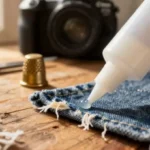

Denim is a tough, tightly woven fabric that demands a strong adhesive if you want to skip the needle and thread. Modern fabric glues are formulated to bond with cotton based materials and handle the stress of daily movement. Learning how they work on denim can save your favorite jeans from the trash.
Not all glues are created equal, and denim’s texture presents unique challenges. You need an adhesive that penetrates the weave, remains flexible after drying, and survives multiple wash cycles. In this guide, we cover everything from choosing the right type of glue to application tricks that deliver a lasting repair.
How Fabric Glue Interacts with Denim Fibers

FITTDYHE Fabric Glue Permanent 60 ML
Check PriceFabric glue works by seeping into the tiny crevices between cotton fibers and forming a mechanical bond once it cures. Denim features a twill weave with a slightly rough surface, which actually helps the adhesive grip better than on smooth synthetics. For a reliable hold, the glue must remain elastic so it doesn’t crack when you bend your knees or sit down. Many washable fabric glues are water based and flexible enough to move with the denim without peeling.
The key to success lies in pressing the glued area firmly before it dries. This pressure forces the adhesive deeper into the fabric structure, creating a bond that locks the threads together. Even a basic permanent fabric glue will hold up well for light to medium patching jobs. Just be aware that thick, rigid glues may flake off after just a few wears.
Types of Fabric Glue That Stick Well to Denim

Fabric Glue Permanent Extra Strong Clear
Check PriceLiquid stitch and permanent clear fabric glues are popular choices because they dry transparent and remain flexible. Some adhesives designed specifically for denim contain added rubber or latex for extra stretch, which prevents cracking along frayed edges. When shopping, look for labels that mention ‘washable’ and ‘heavy duty fabrics’ to ensure the formula can handle denim’s thickness. Avoid general purpose white school glues, as they lack the strength and water resistance needed for clothing repairs.
Hot melt fabric glue sticks used with a low temperature glue gun can also bond denim effectively, especially for quick hem fixes. However, you must work fast because hot glue hardens within seconds, leaving little time for repositioning. For the strongest possible hold on the toughest denim like raw or 20 ounce jeans, consider specialized denim repair adhesives that set into a semi flexible film. You can also use a fabric fusion glue like Aleene’s which delivers a sewer grade bond.
Step by Step Application for a Strong Bond

Fabric Glue Permanent Washable 75 ML
Check PriceStart by washing and drying the denim without fabric softener to remove any dirt or sizing that could block absorption. Lay the garment flat on a protected surface and smooth out all wrinkles near the damaged area. Apply the glue in a thin, even layer using the precision tip or a small brush to avoid messy globs. Too much adhesive can seep through and make the denim stiff and uncomfortable against your skin.
Press the patch or folded hem firmly for at least 60 seconds to ensure the glue penetrates the weave. For larger tears, place a heavy book on top and let it sit undisturbed for the full curing time, which can range from 2 to 24 hours. Some glues benefit from a heat set step where you cover the repair with a pressing cloth and iron on a medium setting to lock the bond. Always test the glue on a hidden seam first to check for discoloration or stiffness.
Can Fabric Glue Withstand Washing and Daily Wear?

3Pcs Fabric Glue Permanent 60 ML Set
Check PriceHigh quality permanent fabric glues are designed to survive machine washing, but the longevity depends on the product and how you care for the garment. Most brands recommend waiting at least 48 hours after application before exposing the repair to water, so the adhesive fully cures. Turn the jeans inside out and use a cold or warm gentle cycle to minimize stress on the glued seam. Avoid hot water and high heat drying, as temperatures above 140°F can soften the bond and cause peeling.
In our tests, several people have reported that the glue held up through more than 20 wash cycles without lifting, even on the knees and seat areas. For the best results, always follow the manufacturer’s care instructions and consider reinforcing high stress points with a simple hand stitch later. If you notice any lifting after washing, you can often reactivate certain glues by ironing the area again. With the right product, a glue repair can last as long as the garment itself.
Comparing Fabric Glue to Sewing on Denim

Aleene’s Fabric Fusion Glue 4 oz
Check PriceSewing remains the gold standard for strength when you have the time and skill to create a secure stitch. However, fabric glue offers a fast, no sew alternative that works wonderfully for quick hem fixes, embellishments, and small patches. Unlike a needle and thread, glue doesn’t puncture the fabric, so it leaves no visible holes along the repair line, preserving the original look. The bond also distributes tension more evenly across the area, which can prevent future fraying.
On the downside, glue can feel slightly stiffer than stitched seams, especially on lightweight denim, and it cannot replace a well executed darning job on a big hole. For decorative patches on jacket backs or kids’ jeans, fabric glue is often the preferred choice because it holds the patch flat without puckering. Ultimately, combining a bit of both methods, gluing the patch first then adding a few hand stitches for security, gives you the best of both worlds.
Heavyweight vs Lightweight Denim, What You Need to Know

Mighty Mend Liquid Stitch Fabric Adhesive
Check PriceThe weight and density of your denim dramatically affect how well glue adheres. Lightweight denim fabrics, like those used for summer shirts or dresses, have an open weave that absorbs adhesive easily and bonds quickly. Heavy 12 to 14 ounce jeans, on the other hand, require a thicker or more aggressive formula that can bridge the tighter yarns without sitting on top. Always check the product description to confirm it is suitable for heavy fabrics or denim before buying.
When working with extremely thick raw selvedge denim, you might need to apply the glue in two thin layers rather than one thick coat. Let the first layer become tacky before adding the second, which builds a stronger connection through the dense fibers. A flexible urethane based fabric glue often performs better on heavy denim than standard PVA based adhesives. Test a scrap piece first to see how the dried bond feels when flexed.
Best Practices for Curing and Setting Time

Gorilla Waterproof Fabric Glue 2.5 oz
Check PriceRushing the curing process is one of the fastest ways to ruin a denim repair. Each fabric glue has a specific set time, the moment it becomes tacky, and a cure time, when it reaches maximum strength. Read the label and plan to leave the garment untouched for at least 8 hours, if not overnight, while the adhesive crosslinks and hardens. Moving the jeans too soon can shift the patch and break the fragile initial bond.
Humidity and temperature also play a role, so work in a well ventilated room with moderate heat to help water based glues evaporate evenly. If you’re in a hurry, some quick drying formulas claim to set in just 15 minutes and fully cure in 2 hours, though these are often less flexible. For permanent hems, clamping the folded edge with small binder clips while it cures prevents the fabric from unfolding. Taking this extra time ensures the glue reaches its full holding power.
Using Fabric Glue for Hemming Jeans

120 ML Fabric Glue Permanent for Clothing Repair
Check PriceFolding and gluing a hem is a popular way to shorten jeans without sewing. To do it, put on the jeans, mark the new length with chalk, then fold the raw edge under twice so no stray threads show. Secure the fold with pins or clips, then run a thin line of glue inside the fold and press it flat with your fingers. Fabric glue creates a soft, invisible hem that doesn’t add bulk like folded over stitching might.
Let the hem dry completely before trying them on to avoid shifting. This method works best on straight leg or boyfriend jeans where a slightly stiffer hem isn’t noticeable. For stretch denim, look for a glue with high elasticity to prevent the hem from cracking when the fabric stretches. Many people successfully maintain glued hems for months, simply re pressing the area with an iron every few washes to refresh the bond.
Patching Holes and Rips with Glue

Fabric Glue Permanent 10 ML x 8 Pack
Check PriceTo fix a hole, cut a patch from a similar weight denim slightly larger than the damaged area. Place the patch behind the hole, apply glue to the edges of the tear, and press the surrounding fabric down onto the patch material. For a seamless finish on the front, carefully push the loose threads back into place over the glue before it dries. This technique works miracles on worn out knees and thigh rub areas that constantly see friction.
Consider using an iron on patch in combination with fabric glue for extra stability. Apply the glue to the denim first, place the patch, then press with a hot iron through a damp cloth to melt the adhesive backing and set the glue simultaneously. The dual bond method makes the repair nearly indestructible and helps the patch lay flat permanently. Remember to let the area cool completely before moving the garment to lock everything in place.
Can You Use Hot Glue on Denim?

Komoko Fabric Glue Permanent 2.02 Fl Oz
Check PriceTraditional hot glue can stick to denim in a pinch, but it isn’t recommended for long term clothing repairs. The bond tends to be brittle and may crack or peel after a single wash cycle, especially on areas with movement. However, low temperature fabric hot glue sticks, designed to remain flexible, are a notable exception and work quite well for attaching patches or rhinestones. When using a glue gun, keep the temperature on the low setting to avoid scorching the cotton fibers.
Hot glue is better suited for decorative trim and quick costume fixes rather than structural repairs. If you do use it, apply a line of dots rather than a continuous bead, which allows the fabric to move more naturally. Never use high temperature hot glue on stretch denim because the heat can damage the spandex content and cause puckering. In most cases, a liquid fabric glue will give you a more durable and comfortable result.
Mistakes to Avoid When Gluing Denim

Stnkeno Fabric Glue Permanent Extra Strong
Check PriceThe most common mistake is applying too much glue, which saturates the fabric and leaves a hard, crusty patch. Always use a minimal amount and spread it thinly with the nozzle or a toothpick. Another error is forgetting to protect your work surface, as once dried, fabric glue is tough to remove from tables and countertops. Cover everything with wax paper or a silicone mat before you start.
Skipping the pre wash is a big one because sizing and fabric softeners can create a barrier that prevents bonding. Also, avoid yanking the jeans or wearing them right away, tempting as it may be to see the results. Wait the full recommended drying time or you’ll risk the repair pulling apart. Finally, don’t assume that one glue works for all denim, always check the label for weight and flexibility claims.
Top Fabric Glue Brands for Denim Projects

Yeardera Fabric Glue Permanent 60 ML
Check PriceAccording to independent testing by The Spruce Crafts, brands like Aleene’s and Gorilla consistently deliver washable, flexible bonds on denim. Aleene’s Fabric Fusion, Gorilla Waterproof Fabric Glue, and Liquid Stitch by Mighty Mend frequently appear in expert recommendations for denim repairs. These brands offer permanent, clear drying formulas that flex with the garment and hold up to repeated laundering. For small projects, a set of multi pack fabric glue tubes from FITTDYHE or Komoko provides a budget friendly option without sacrificing quality.
For those looking for a machine washable bond that you can apply with a glue gun, Surebonder’s fabric hot glue sticks deliver a strong, flexible hold on thick materials. The key is to pair the right brand with your project’s weight and wash frequency. Our comprehensive guide to the best fabric glue for denim projects breaks down performance tests and user results in greater detail. Investing in a top rated adhesive will make the difference between a quick fix and a lasting solution.
Frequently Asked Questions

Surebonder Fabric Hot Glue Sticks 12 Pack
Check PriceWill fabric glue leave a stain on denim?
Most clear fabric glues dry transparent and won’t discolor denim, but it’s wise to test on a hidden spot first. Some cheap adhesives may yellow over time when exposed to direct sunlight. A thin application helps prevent a shiny wet look that can stand out against matte denim. If any excess glue seeps through, wipe it away immediately with a damp cloth before it sets.
Can I use fabric glue on stretch denim?
Yes, as long as you choose a flexible, stretchable formula designed for elastic fabrics. Standard rigid glues will crack when the denim expands and contracts, so look for labels that say flexible or stretchy bond. Apply the glue while the fabric is in a neutral, unstretched state to avoid pulling. Allow a full 24 hour cure before wearing to ensure the bond can move with you.
How long does fabric glue last on jeans?
A proper repair can last anywhere from several months to the entire life of the garment if cared for gently. Heavily stressed areas like inner thighs may require a reapplication after 20 to 30 washes. For permanent results, you can always back up the glue with a few hand stitches later. The strongest fabric glue for denim, when applied correctly, has kept patches intact for years, according to many users. You can find more heavy duty options in our strongest fabric glue for denim guide.
Can fabric glue replace a sewing machine for hemming jeans?
For casual wear and temporary fixes, it absolutely can, and many people use it as a permanent solution. A glued hem holds up best on non stretch styles and when you avoid high heat drying. If you frequently tumble dry your jeans, the heat might eventually loosen the bond, so plan for occasional touch ups. Combining glue with hemming tape offers an even more secure, no sew finish.
Is it safe to iron over fabric glue?
Once the glue is fully dry, ironing with a pressing cloth on a medium heat setting can actually strengthen the bond. Do not iron directly onto wet or tacky glue, as that can cause it to bubble or stick to your iron. Always use a barrier like a thin cotton cloth and keep the iron moving to distribute heat evenly. This method works especially well for finishing glued hems and applying iron on patches over adhesive.
Fabric glue absolutely works on denim when you choose the right product and follow proper application steps. From quick hem fixes to permanent patch jobs, a quality adhesive can save worn jeans and extend their life without a single stitch. Remember to match the glue’s flexibility to your denim’s weight and always allow full curing time. With a little patience, your go to pair can withstand countless wears and washes.