
Figuring out how to choose a sewing table is one of the most impactful decisions you’ll make for your craft setup. Whether you’re a beginner working on simple tote bags or an intermediate sewist tackling large home decor projects, the right table will reduce strain, keep your supplies organized, and make every stitch more enjoyable. I’ve sewn on everything from dining room tables to custom built-in cabinets over the past decade, and I can tell you firsthand that a poorly chosen table will hold you back more than a slow sewing machine ever could.
A dedicated sewing table isn’t just a flat surface for your machine. It’s an ergonomic workspace that protects your physical health, a storage hub for your growing collection of threads, scissors, and sewing patterns, and a stable base that keeps your machine from vibrating loose mid-project. Skimping on this purchase often leads to back pain, lost supplies, and frustration that makes you want to quit sewing entirely. Unlike a sewing machine, which you might upgrade every few years, a high-quality table can last a decade or more with proper care.

Best Choice Products Folding Sewing Table Multipurpose Craft Station & Side Desk with Compact Design, Wheels, Shelves, Storage Trays, Pegs, Magnetic Doors, Metal Doorknobs – Light Green
Check PriceWhy Your Sewing Table Choice Matters
Most new sewists start by using a dining table or kitchen island, only to realize within weeks that those surfaces are not designed for sewing. Dining tables are often too tall or too short for comfortable sewing posture, and they rarely have space for a sewing machine cutout, which means your machine sits raised on the surface, creating a lip that catches fabric as you slide projects across the table. They also offer no dedicated storage for sharp tools like rotary cutters or small items like presser feet, which leads to cluttered workspaces and lost supplies.
Stability is another critical factor. Sewing machines vibrate with every stitch, and flimsy tables amplify that vibration, leading to uneven seams, broken needles, and even damage to your machine’s internal mechanisms over time. I once spent months sewing on a $30 folding table that wobbled so badly I had to stack books under the legs, which scratched my hardwood floors and still didn’t fully fix the issue. Upgrading to a sturdy dedicated table cut my needle breakage in half and eliminated the back pain I’d been dealing with for months.
Key Factors to Consider When Choosing a Sewing Table

Best Choice Products Folding Sewing Table Multipurpose Craft Station & Side Desk with Compact Design, Wheels, Shelves, Storage Trays, Pegs, Magnetic Doors, Metal Doorknobs – White
Check PriceMeasure Your Available Space First
Never buy a table without measuring your workspace first. Start by measuring the exact floor space where you plan to put the table, then add 24 inches behind the table for chair clearance, and 18 inches on each side for drawer pull-out or chair movement. If you use a large cutting mat (most quilters use 24×36 inch mats), add an extra 12 inches to the width and depth to accommodate it. Don’t forget to measure doorways, hallways, and elevators if you need to move the table into a second-floor bedroom or apartment: I once made the mistake of buying a large cabinet that wouldn’t fit through my 30-inch apartment door, and had to pay a restocking fee to return it.
Match the Table Size to Your Project Types
Your most common project types should dictate the size of your table. Quilters need tables at least 60 inches wide to lay out full quilt tops without scrunching fabric, while garment sewists can get away with 40-50 inch widths, plus extra space for draping fabric on a dress form. Beginners working on small projects like pillowcases or stuffed animals can use a 30-inch table, but if you plan to grow your skills to larger projects, it’s worth buying a slightly larger table upfront to avoid having to replace it in a year. Always measure your largest planned project and add 12 inches on each side for workspace.
Prioritize Stability and Sturdiness
As mentioned earlier, stability is non-negotiable. Look for tables with solid wood or heavy-gauge metal frames, and check the weight capacity: most home sewing machines weigh 15-25 lbs, but industrial machines can weigh 30+ lbs, so choose a table rated for at least 50 lbs to account for added pressure when you lean on the surface. Avoid tables made entirely of particle board, which warps over time and wobbles even with light use. If you’re shopping in person, push on the corner of the table: if it wobbles more than a quarter inch, skip it, no matter how good the price is.
Evaluate Storage and Organization Needs
If you’re tired of digging through shoeboxes for matching thread or losing your fabric scissors under piles of fabric, storage should be a top priority. Basic folding tables have no built-in storage, while dedicated sewing cabinets include drawers, cubbies, and enclosed doors to keep supplies dust-free. If you’re deciding between a basic table and a full cabinet, check out our comparison of the best sewing cabinets to see which style fits your workflow. Consider what you need to store: thread spools, scissors, rotary cutters, patterns, and presser feet all need different storage solutions. Drawers with adjustable dividers are far more useful than open cubbies for small items that can roll around.
Consider Material and Durability
The table surface material impacts both durability and ease of cleaning. Laminate surfaces are the most popular choice: they resist scratches from rotary cutters, wipe clean easily if you spill coffee or marker, and are affordable. Solid wood surfaces are sturdy but can warp if exposed to moisture, and they stain easily if spills aren’t cleaned immediately. Avoid glass-topped tables entirely: they scratch easily, show every fingerprint, and can shatter if you drop a heavy tool like a pair of shears. Metal surfaces are durable but can be noisy when you set tools down, and they get cold in winter, which can be uncomfortable if you lean your arms on the table while sewing.
Check for Sewing-Specific Features
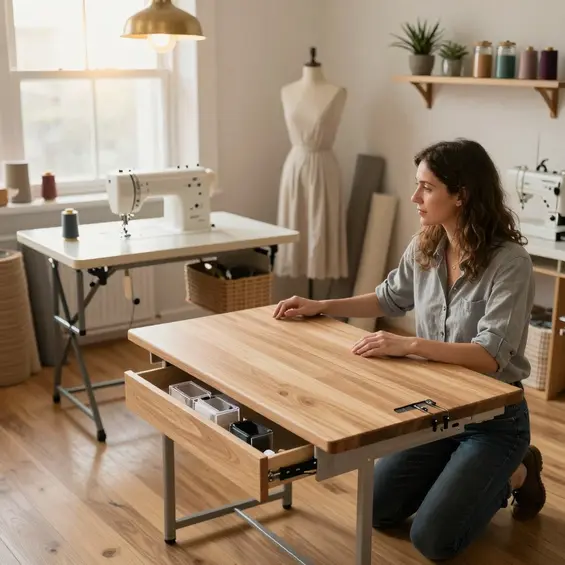
Generic tables lack features designed for sewists, which can make sewing more frustrating than it needs to be. The most useful feature is a drop-in machine insert: a custom-cut piece of material that sits your sewing machine flush with the table surface, eliminating the lip that catches fabric. Other useful features include a pre-cut machine cutout (if the table doesn’t come with an insert), built-in power strips to avoid dangling cords, locking casters for mobility, and fold-down side leaves for extra workspace when working on large projects. Adjustable height is another game-changer: it lets you raise the table to stand while cutting fabric, then lower it to sit while sewing, which reduces back strain significantly.
Set a Realistic Budget
Sewing tables range from $50 for basic folding models to $2000+ for high-end custom cabinets. Set your budget based on how often you sew: if you sew once a month, a $100 folding table is perfectly adequate. If you sew daily, invest in a mid-range table ($200-$500) that will last for years. I spent $450 on my current mid-range table 5 years ago, and it’s still as sturdy as the day I bought it, even with daily use. Avoid overspending on features you won’t use: if you never sew quilts, you don’t need a 60-inch wide table, no matter how good the deal is.

Crutello Folding Sewing Table and Craft Table for Adults – 42×24 inch Grid Top Crafting Desk for Fabric Cutting & Crafts – Steel Folding Storage Legs & Drop Down Sewing Machine Platform
Check PriceSewing Table Types: Which Fits Your Needs?
Basic Folding Tables
Basic folding tables are the most affordable option, typically costing $50-$150. They’re lightweight, portable, and easy to store when not in use, making them ideal for beginners, sewists with small apartments, or people who take sewing classes and need to transport their table. The downsides are minimal storage, poor stability, and short lifespan: most folding tables only last 1-2 years with regular use. For small apartments or shared workspaces, folding models are a top pick – we break down the top rated folding sewing tables in a separate guide to help you pick a sturdy model.
Dedicated Sewing Cabinets
Dedicated sewing cabinets are enclosed units with built-in storage, sturdy frames, and often fold-out leaves for extra workspace. They typically cost $300-$1200, and many include hydraulic lifts to raise and lower your sewing machine so it sits flush with the surface when in use, and tucks inside the cabinet when not. These are best for daily sewists who have a dedicated craft room and lots of supplies to store. High-end models can include built-in lighting, thread racks, and even cutting mats integrated into the surface.
Adjustable Height Tables
Adjustable height tables let you switch between sitting and standing while sewing, which is a huge benefit for sewists with back pain or those who are very tall or short. They typically cost $200-$600, and most adjust between 25 and 35 inches tall. Some models have programmable height settings so you can save your preferred sitting and standing heights. These are also a good choice for multi-person households where multiple people of different heights use the same table.
Custom Built-In Tables
Custom built-in tables are designed to fit your exact space, often built into a closet, alcove, or along a wall. They maximize every inch of available space, and can include custom storage, integrated cutting surfaces, and even built-in ironing boards. They’re the most expensive option, typically costing $1000+, and are permanent once installed, so they’re only a good choice if you own your home and have a dedicated sewing room you don’t plan to repurpose. Many sewists choose to build their own custom tables to save money, using base cabinets and a laminate countertop for a fraction of the cost of a pre-made cabinet.

Athena Collection Sewing Table with Sotrage Shelf & Drawers, Adjustable Height Sewing Machine Tabletop with Folding Deak for Crafting, Heavy-Duty Metal Frame for Home Bedroom
Check PriceCommon Mistakes to Avoid When Buying a Sewing Table
- Buying a table that’s too small for your projects: always measure your largest planned project and add 12 inches on each side for workspace, plus extra space for a cutting mat if you use one.
- Ignoring table height: standard 30-inch tables are too tall for sewists under 5’4”, and too short for those over 5’10”. Adjustable height is worth the extra $50-$100 cost to avoid back pain.
- Forgetting about cord management: dangling cords can get caught on your chair or machine, leading to spills or damaged equipment. Look for tables with built-in cord holes or power strips.
- Not checking weight capacity: industrial sewing machines weigh 30+ lbs, so a table rated for 20 lbs will wobble or collapse over time. Always check the weight limit before buying.
- Skipping assembly reviews: some tables take 4+ hours to assemble with unclear instructions. Check online reviews for notes on assembly difficulty before buying.
- Buying based on looks alone: a cute table that wobbles or has no storage will frustrate you within weeks. Always prioritize function over aesthetics.
Frequently Asked Questions About Sewing Tables
What is the standard height for a sewing table?
Most standard sewing tables are 29-30 inches tall, which matches standard desk height. But adjustable height models (25-35 inches) are better for ergonomics, especially if you’re tall or prefer to stand while sewing. Proper table height is critical for avoiding back and neck strain, as outlined in trusted sewing workspace guidelines from The Spruce Crafts. A quick way to test height: sit at the table with your feet flat on the floor, and bend your elbows at a 90-degree angle. Your hands should rest comfortably on the table surface without hunching your shoulders.
Do I need a sewing table with a machine insert?
A drop-in machine insert that sits your sewing machine flush with the table surface is a game-changer for most sewists. It reduces fabric snagging, makes hemming large items like curtains or quilts easier, and prevents your project from sliding into the gap between the machine and table. It’s not mandatory for beginners working on small projects, but highly recommended for intermediate sewists working on large projects. Many tables let you buy a custom insert separately if the table doesn’t come with one, so you don’t have to replace the entire table later.
Can I use a regular desk as a sewing table?
You can, but it’s not ideal. Regular desks often lack the sturdiness to handle the vibration of a sewing machine, may not have space for a machine cutout, and rarely include dedicated storage for sewing supplies. If you use a regular desk temporarily, add a non-slip mat under your machine to reduce movement, and place a rolling storage cart next to the desk for supplies. Avoid using glass-topped desks, as the vibration can cause the machine to slide, and rotary cutters will scratch the surface immediately.
How much should I spend on a sewing table?
Budget tables (folding or basic models) range from $50-$150, mid-range dedicated sewing tables cost $200-$500, and high-end cabinets with custom features can run $800-$2000. Spend what fits your usage: if you sew once a month, a $100 folding table is fine. If you sew daily, invest in a mid-range or higher model that will last for years. Remember that a $300 table that lasts 10 years is cheaper per year than a $100 table that needs to be replaced every 2 years.
Are IKEA tables good for sewing?
Many IKEA tables, like the LINNMON or ALEX desk combos, are popular budget options for sewists. They offer decent storage, are easy to assemble, and have a flat laminate surface that’s easy to clean. However, they may not be sturdy enough for heavy machines or large projects, as the particle board frames can wobble with vibration. If you go this route, add furniture straps to secure the table to the wall if you have kids or pets, and use a non-slip mat under your machine to reduce movement.
Conclusion
Learning how to choose a sewing table doesn’t have to be overwhelming if you prioritize your specific needs. Start by measuring your space, listing the features you use most (storage, adjustable height, machine insert), and setting a budget that matches how often you sew. Remember: the most expensive table isn’t always the best, and the cheapest table will cost you more in frustration and physical strain long-term.
If you’re ready to buy, start by narrowing down your options to 2-3 models that fit your criteria, read recent customer reviews, and test the table in person if possible. A good sewing table will serve you for years, making every sewing session more enjoyable and productive. Take your time with this decision – your back, your supplies, and your finished projects will thank you.