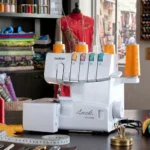

If you’ve just unboxed your first serger, you’ve probably asked yourself: Is serger thread universal? It’s a fair question, especially when you already have a stash of regular sewing thread and don’t want to waste money on new supplies. But serger thread isn’t just a smaller spool of the same material you use for your sewing machine—there are key differences that affect compatibility, stitch quality, and even your machine’s lifespan.
As someone who’s spent over a decade sewing and teaching serger basics, I’ve made the mistake of using regular thread in a serger more times than I’d like to admit. The results ranged from messy, uneven stitches to a jammed looper that took an hour to fix. This guide breaks down everything you need to know about serger thread compatibility, so you can avoid those same mistakes.

AK Trading 4-Pack White All Purpose Sewing Thread Cones (6000 Yards Each)
Check PriceWhat Is Serger Thread, Exactly?
Serger thread is a specialized type of thread designed specifically for overlock (serger) machines. Unlike all-purpose sewing thread, which is made for straight stitching on a regular sewing machine, serger thread is engineered to withstand the high speeds and multiple thread paths of a serger, which typically uses 3 to 4 cones of thread at once.
Most sergers are also called overlockers, and if you’re unsure of the differences between serger, overlock, and coverstitch machines, you can review our serger and overlocker comparison guide for clarity.

Black & White Sewing Thread, 8PCS 40S/2 3000 Yard Spool Serger Thread
Check PriceKey Differences Between Serger and Regular Sewing Thread
The biggest differences come down to weight, fiber content, and spool design. Here’s a quick breakdown:
- Thread Weight: Serger thread is almost always a lighter weight (higher weight number) than all-purpose sewing thread. All-purpose thread is typically 40–50 weight, while serger thread ranges from 60–80 weight. Thinner thread is essential because sergers pull thread much faster than sewing machines, and thicker thread would overload the tension discs or loopers.
- Fiber Content: Most serger thread is 100% polyester, which is strong, stretchy, and resistant to fraying. Some specialty serger threads are cotton or nylon, but polyester is the standard for most everyday projects. Regular sewing thread can be cotton, polyester, or a blend, but it’s often thicker and less stretchy than serger thread.
- Spool Design: Serger thread comes on tall, narrow cones that hold 2,000–5,000 yards of thread, compared to the 500–1,000 yards on a standard sewing thread spool. Cones feed thread smoothly at high speeds, while small spools can wobble or tangle on a serger’s thread pins.
- Finish: Serger thread has a smoother, lower-friction finish than regular thread, which prevents it from snagging as it passes through the serger’s multiple thread guides and loopers.
Is Serger Thread Universal? The Short Answer

B 16 Pack Serger Thread Cones, 1800 Yards Each Spool Overlock Thread, Polyester Thread 40s/2 for Serger & Overlock, Quilting, Piecing, Sewing Machine
Check PriceNo, serger thread is not fully universal. While most sergers use 60–80 weight polyester thread, there are exceptions based on your machine’s make, model, and the type of project you’re working on. A thread that works perfectly for a lightweight chiffon hem on a Brother serger might jam a heavy-duty Janome serger sewing through denim.
The confusion around universality often comes from the fact that most serger thread is sold as “universal” or “all-purpose serger thread.” These labels refer to the thread being suitable for most standard serger projects (knits, wovens, light- to medium-weight fabrics), not that it fits every serger on the market.
When Serger Thread Is Compatible Across Machines

Tortoise 8 Cones of 3000 Yards Each Spool Thread for All Purpose Sewing, Serger, Overlock, Quilting, Machine – 100% Polyester – 40S/2
Check PriceMost modern home sergers from major brands (Brother, Janome, Singer, Baby Lock) are designed to work with standard 60–80 weight polyester cone thread. If you’re using a mid-range serger for everyday projects like hemming t-shirts or finishing seam allowances, you can safely use any reputable brand of universal serger thread.
Thread weight is the most important factor here. As long as the thread weight matches your machine’s recommendations, the brand rarely matters for basic projects. For more details on thread weight standards, you can refer to this detailed serger thread guide, a trusted resource for sewists.
When Serger Thread Is Not Compatible
- Heavy-Duty Sergers: Industrial or heavy-duty home sergers designed for thick fabrics like denim or canvas may require thicker 40-weight thread, which standard serger thread can’t handle.
- Specialty Sergers: Coverstitch machines or combination serger/coverstitch machines may have specific thread requirements for the coverstitch function, which uses a different loop path than standard overlocking.
- Vintage Sergers: Older sergers from the 1980s or 1990s may have narrower thread paths that can’t fit modern 60-weight thread, or tension discs calibrated for thicker thread.
- Specialty Projects: If you’re serging delicate fabrics like silk or doing decorative overlocking with metallic thread, standard universal serger thread won’t work. You’ll need specialty thread matched to the fabric and project.
Can You Use Regular Sewing Thread in a Serger?

Serger Thread – 4 Cones x 3000 Yards (12,000 Yards Total) | 40S/2 Polyester All-Purpose Thread for Sergers, Overlock Machines, Quilting & Handcrafts
Check PriceShort answer: sometimes, but it’s not recommended for regular use. Using regular 40-weight sewing thread in a serger designed for 60-weight thread can cause multiple issues, from poor stitch quality to permanent machine damage.
Risks of Using Regular Thread in a Serger
- Tension Issues: Thicker regular thread won’t sit properly in the serger’s tension discs, leading to loose, loopy stitches or thread bunching under the fabric. If you’re struggling with tension problems after using regular thread, our serger tension troubleshooting guide can help you fix the issue.
- Looper Jams: Sergers have small, precision-calibrated loopers that pull thread to form overlock stitches. Thicker regular thread can get stuck in the looper, requiring you to disassemble part of the machine to clear the jam.
- Increased Wear: Forcing thicker thread through narrow thread paths puts extra strain on your serger’s motor, tension discs, and loopers, shortening the machine’s lifespan over time.
When Regular Thread Is Okay for Sergers
There are a few edge cases where regular thread works in a serger:
- You’re using a single spool of regular thread for decorative topstitching on a serger that allows for it.
- Your serger’s manual explicitly states that 40-weight thread is compatible for specific projects.
- You’re in a pinch and only need to serge a single seam, and you’re willing to re-thread the machine immediately after with proper serger thread.
How to Choose the Right Serger Thread for Your Machine
Choosing the right thread doesn’t have to be complicated. Follow these simple steps to ensure compatibility every time:
Step 1: Check Your Serger’s Manual First
Your serger’s manual is the ultimate source of truth for thread compatibility. It will list the exact thread weight, fiber content, and spool size recommended for your machine. If you’ve lost your manual, most brands have digital copies on their websites.
Step 2: Match Thread Weight to Your Fabric
Lighter fabrics need lighter thread: use 80-weight thread for chiffon, silk, or lightweight knits. Medium-weight fabrics like cotton or linen work with standard 60-weight thread. Heavy fabrics like denim or canvas need 40-weight thread, but only if your serger’s manual says it’s compatible.
Step 3: Avoid Low-Quality Thread
Cheap serger thread from discount bins is often unevenly spun, has excessive fuzz (lint), or breaks easily. Lint from low-quality thread builds up in your serger’s tension discs and loopers, leading to frequent jams. Stick to reputable brands like Maxi-Lock, Gutermann, or Mettler for consistent results.
Step 4: Use Cone Adapters for Small Spools
If you want to use a small spool of specialty thread (like metallic or nylon) in your serger, you’ll need a cone adapter. These small plastic holders fit onto your serger’s thread pin and hold standard spools upright, preventing them from wobbling as the thread feeds. Most serger brands sell adapters for $5–$10.
Common Serger Thread Myths Debunked
There’s a lot of misinformation floating around about serger thread. Let’s clear up the most common myths:
Myth 1: All Serger Thread Fits All Sergers
False. As outlined earlier, thread weight, machine type, and project needs all affect compatibility. A “universal” serger thread label only means it works for most standard home sergers doing everyday projects, not every serger on the market.
Myth 2: Regular Thread Works Fine for All Serger Projects
False. While regular thread might work for a single seam in a pinch, using it regularly will lead to tension issues, jams, and machine wear. Serger thread is engineered specifically for the high speed and multiple thread paths of overlock machines.
Myth 3: Thread Brand Doesn’t Matter
Mostly false. For basic projects, most reputable brands of 60-weight polyester thread will work. But cheaper, off-brand threads often have inconsistent thickness or excessive lint, which causes problems even if the weight is correct. Stick to trusted brands to avoid headaches.
Frequently Asked Questions
Can I use embroidery thread in my serger?
Only if your serger’s manual says it’s compatible. Embroidery thread is often 40-weight or thicker, and has a glossy finish that can slip out of serger tension discs. If you do use it, only use it for decorative overlocking, not for structural seams.
What size cones do most sergers use?
Most home sergers use cones that are 1.5–2 inches in diameter and 4–6 inches tall, holding 2,000–5,000 yards of thread. Industrial sergers use larger cones, up to 8 inches tall. Always check your manual for exact cone size requirements.
Is serger thread stronger than regular sewing thread?
Not necessarily. While serger thread is designed to withstand high speeds, regular 40-weight polyester thread is often stronger per inch because it’s thicker. Serger thread’s strength comes from its stretch and smoothness, not thickness.
Can I mix serger thread brands in one project?
Yes, as long as all the threads are the same weight and fiber content. Mixing a 60-weight polyester thread with a 40-weight cotton thread will cause tension issues, but using two different brands of 60-weight polyester thread is fine.
Conclusion
So, is serger thread universal? The answer is a firm no, but with a few caveats. Most standard home sergers work with universal 60–80 weight polyester cone thread, but you should always check your manual first, match thread weight to your fabric, and avoid using regular sewing thread for regular serger projects.
Investing in high-quality serger thread might cost a little more upfront, but it will save you time and money in the long run by preventing jams, tension issues, and machine repairs. If you do run into problems after switching thread, refer back to our serger tension troubleshooting guide to get your machine back on track.
Happy serging!