
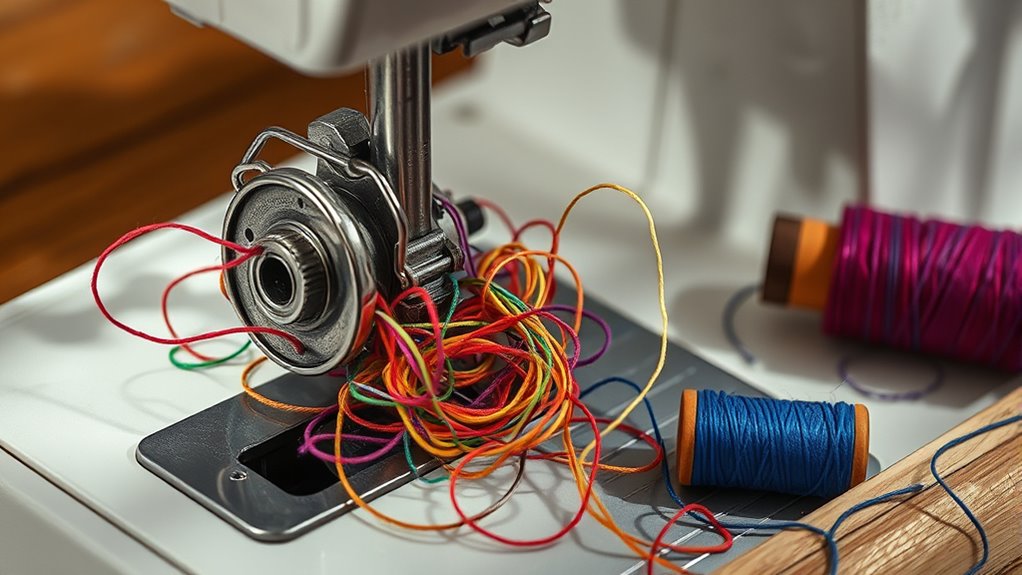

Bobbin thread tension problems can undermine your sewing projects. Uneven stitches, puckering, or bobbin thread appearing on the fabric’s top side are clear indicators of tension issues. It’s crucial to test your bobbin tension for balance—tight or loose tension can lead to significant complications. Regular maintenance, including cleaning and adjusting tensions, can prevent many issues. If you’re facing persistent problems, don’t hesitate to explore solutions that can enhance your sewing experience.
Understanding Bobbin Thread Tension
Understanding bobbin thread tension is essential for achieving high-quality sewing results, as improper tension can lead to a variety of issues, including uneven stitches and thread breakage.
The key to successful sewing lies in achieving a proper tension balance between the bobbin thread and the upper thread. When the tension’s too tight, the bobbin thread may not feed evenly, causing puckering or thread snapping.
Conversely, if the tension’s too loose, you might experience loose stitches or fabric gathering. To adjust the bobbin thread tension, locate the tension adjustment screw on your bobbin case.
Turning it clockwise increases tension, while counterclockwise decreases it. Regularly check your tension settings, especially when changing thread types or fabrics, to guarantee peak sewing performance.
Common Symptoms of Tension Issues
Several telltale signs can indicate bobbin thread tension issues during sewing. If you notice uneven stitches or fabric puckering, it’s a clear signal that tension adjustments are needed.
Additionally, if the bobbin thread is showing on the top side of your fabric, it’s often a result of improper tension settings. Common sewing mistakes, such as using the wrong needle size or thread weight, can also exacerbate these problems.
To correct these issues, apply tension adjustment techniques by fine-tuning the bobbin case or adjusting your sewing machine’s settings. Ignoring these symptoms can lead to further complications in your project, so it’s essential to address them promptly for a smooth sewing experience.
Factors Affecting Bobbin Thread Tension
Several factors can greatly impact bobbin thread tension, and it’s crucial to understand them for ideal sewing performance. You’ll need to take into account bobbin case adjustments, the compatibility of the thread type with your machine, and the condition of the tension spring. Addressing these elements can help you achieve balanced stitching and prevent tension-related issues.
Bobbin Case Adjustment
While achieving the right bobbin thread tension may seem straightforward, it’s influenced by several key factors that require careful adjustment of the bobbin case. Proper bobbin case maintenance and tension adjustment techniques are essential for optimal performance.
Here’s what you should consider:
- Thread Thickness: Different threads require specific tension settings to perform well.
- Bobbin Case Wear: A worn case can lead to inconsistent tension and poor stitching quality.
- Machine Settings: Confirm your sewing machine is calibrated correctly for the type of fabric and thread you’re using.
Thread Type Compatibility
When choosing thread for your sewing projects, it’s essential to understand how thread type affects bobbin thread tension. The thread weight plays a significant role; lighter threads may require less tension, while heavier threads can necessitate increased tension for ideal stitching.
Additionally, the thread material influences compatibility. For instance, polyester threads tend to have different tension characteristics compared to cotton threads. If you mix materials, you might experience inconsistent tension, leading to issues like thread breakage or fabric puckering.
Always match the thread weight and material to your machine’s specifications for the best results. Understanding these factors will help you achieve a smooth sewing experience and avoid frustrating bobbin thread tension problems.
Tension Spring Condition
The condition of the tension spring is vital for maintaining proper bobbin thread tension. If your tension spring shows signs of wear, it can lead to inconsistent stitches and frustration during sewing. Regular tension calibration is essential to guarantee the spring operates effectively. Consider these points:
- Inconsistent stitches can ruin your project, leading to wasted time and materials.
- Thread breakage often occurs when the spring isn’t functioning properly, causing headaches and delays.
- Poor fabric handling can result from inadequate tension, diminishing your sewing experience.
How to Test Bobbin Tension
To effectively assess bobbin tension, you’ll want to conduct a simple test that reveals whether adjustments are necessary. Start by removing the bobbin from the case and holding it by the thread.
Let the bobbin dangle freely. If it falls too quickly or doesn’t move at all, you may have an imbalance in bobbin tension. For tension testing, a well-balanced bobbin should allow the thread to unwind steadily with a slight resistance.
If you find it’s too loose or tight, note this discrepancy. This testing method helps guarantee proper bobbin balance, which is essential for achieving ideal stitch quality in your sewing projects. Be certain to document your findings before proceeding to any adjustments.
Adjusting Bobbin Tension: A Step-by-Step Guide
To adjust bobbin tension effectively, you first need to understand the basics of how tension affects your sewing. You’ll also want to gather the necessary tools to make precise adjustments and troubleshoot any common issues that arise. This guide will walk you through each step to guarantee your machine operates smoothly and produces high-quality stitches.
Understanding Bobbin Tension Basics
Understanding bobbin tension is essential for achieving ideal sewing results. Proper bobbin tension affects your stitching quality and overall project satisfaction. To guarantee you’re on the right track, focus on these key aspects:
- Bobbin winding techniques: Guarantee your bobbin is wound evenly and tightly; this sets the foundation for tension.
- Thread path accuracy: Verify that the thread follows the correct path through the machine, as misalignment can lead to tension problems.
- Tension adjustments: Regularly check and adjust the bobbin tension to match your project requirements, as different fabrics and threads may need varying tension levels.
Tools for Adjusting Tension
When it comes to adjusting bobbin tension, having the right tools on hand can make a significant difference in the outcome of your sewing projects. You’ll need essential tension adjustment tools to guarantee accuracy and effectiveness. These include a screwdriver for making precise adjustments, a ruler or measuring tape for determining thread length, and a tension gauge for measuring tension accuracy.
| Tool | Purpose | Importance |
|---|---|---|
| Screwdriver | Adjust bobbin tension | Precise modifications |
| Ruler/Measuring Tape | Measure thread length | Consistent results |
| Tension Gauge | Measure tension accuracy | Verify adjustments |
Using these tools will help you achieve the perfect bobbin tension, enhancing your sewing efficiency.
Troubleshooting Common Issues
Although bobbin tension issues can be frustrating, troubleshooting them effectively can greatly improve your sewing results. Start by checking your thread compatibility; using the wrong thread can lead to tension problems. Next, assess your sewing technique; make sure you’re not pulling the fabric too tightly while sewing.
Here are key steps to troubleshoot:
- Inspect the bobbin case: Make sure it’s clean and properly threaded.
- Adjust the tension: Use a screwdriver to turn the tension screw slightly, testing after each adjustment.
- Test your stitches: Sew a sample piece to evaluate the tension before continuing.
The Role of the Needle in Tension Problems
The needle plays a significant role in maintaining proper bobbin thread tension, as it directly affects how the upper and lower threads interact during stitching. An incorrect needle size or type can lead to tension problems, causing issues like skipped stitches or thread breakage.
| Needle Type | Effect on Tension |
|---|---|
| Universal | Versatile; good for most fabrics |
| Ballpoint | Best for knits; reduces snagging |
| Quilting | Wider eye; accommodates thicker threads |
| Embroidery | Sharp point; creates precise holes |
Selecting the right needle size and type for your fabric is essential. A properly chosen needle enhances tension balance, ensuring your stitching remains smooth and consistent throughout your project.
When to Seek Professional Help
While many bobbin thread tension issues can be resolved with minor adjustments, there are times when seeking professional help becomes necessary. If you’re experiencing persistent problems or the machine shows signs of distress, it’s wise to take into account professional services.
You should seek assistance when:
- You’ve tried multiple adjustments with no improvement in stitch quality.
- Your sewing machine exhibits unusual noises or mechanical issues.
- You’re unsure how to disassemble or troubleshoot components safely.
Ignoring these signs can lead to further complications and costly repairs. Recognizing when to consult a professional not only saves time but also guarantees the longevity of your machine, allowing you to return to your sewing projects with confidence.
Preventative Measures for Future Tension Issues
To prevent future bobbin thread tension issues, it is essential to establish a regular maintenance routine for your sewing machine. This includes cleaning lint from the bobbin area and ensuring proper threading techniques. Always refer to your machine’s manual for guidance on threading and tension settings.
| Maintenance Task | Frequency |
|---|---|
| Clean bobbin area | After every project |
| Check threading | Before starting a new project |
| Inspect bobbin case | Monthly |
Maintaining Your Sewing Machine for Optimal Performance
Properly maintaining your sewing machine is essential for achieving perfect performance, as neglect can lead to a range of issues, including uneven stitches and thread breakage. To guarantee peak performance, follow these key sewing machine maintenance practices:
- Regularly clean your machine to remove lint and dust that can affect operation.
- Oil moving parts as recommended in the manual to keep them functioning smoothly.
- Check tension settings and adjust as needed to prevent thread issues.
Frequently Asked Questions
Can Bobbin Thread Tension Affect Stitch Quality on Different Fabrics?
Yes, bobbin thread tension can greatly affect stitch quality on different fabrics. If your bobbin winding isn’t consistent, varying fabric thickness may lead to uneven stitches, causing puckering or poor tension balance in your sewing project.
How Often Should I Check My Bobbin Thread Tension?
You should check your bobbin thread tension regularly, especially after fabric changes. For instance, when sewing denim versus silk, applying bobbin maintenance tips and tension adjustment techniques guarantees consistent stitch quality and prevents sewing complications.
What Tools Are Needed for Adjusting Bobbin Tension?
You’ll need tension adjustment tools like a screwdriver and a tension gauge. For effective adjustments, use tension testing methods such as the pull test or stitch quality analysis to guarantee ideal thread performance and balance.
Are There Specific Bobbins That Work Better for Tension Control?
Yes, certain bobbin types can enhance tension control. Using high-quality bobbins designed for your machine helps achieve better tension adjustments, ensuring smooth stitching and reducing issues. Always match bobbin types with your thread and fabric for ideal results.
Does Humidity Affect Bobbin Thread Tension?
Yes, humidity affects bobbin thread tension. Increased humidity can cause thread to absorb moisture, leading to tension adjustments. You might need to recalibrate your tension settings to maintain consistent stitch quality under varying humidity conditions.